The allure of uncovering hidden treasures often calls, even when the skies open up. For many seasoned enthusiasts, a rainy day isn’t a deterrent but an opportunity. Can you truly use a metal detector in the rain safely? Absolutely! With the right knowledge, proper gear, and a few smart precautions, not only can you continue your hunt, but you might even find that wet conditions offer unique advantages. This comprehensive guide will equip you with the expertise to navigate the elements, protect your valuable equipment, and ensure your treasure-hunting adventures remain productive and safe, rain or shine.
Metal Detector: Overview and Applications
A metal detector is an electronic instrument used to detect the presence of metal nearby. It operates by emitting an electromagnetic field from its search coil. When this field encounters a metallic object, it creates a fluctuating magnetic field, which the detector then senses, signaling the presence of an object through an audible tone or visual display. From their early use in mining and military applications, metal detectors have evolved significantly. The initial inventions were rudimentary, but technological advancements have led to sophisticated devices capable of distinguishing between different metal types and operating in various environments.
Today’s market features several popular types of metal detectors, each suited for different conditions and purposes. Very Low Frequency (VLF) detectors are common for general treasure hunting, offering good discrimination between targets. Pulse Induction (PI) detectors excel in highly mineralized ground, including saltwater beaches, and are known for their depth capabilities. Beyond these, specialized detectors are designed for gold prospecting, underwater use, or even security checks. The applications of metal detectors are vast, ranging from hobby treasure hunting and relic recovery to critical roles in security screening, archaeological digs, and industrial quality control.
Navigating the Rain: Important Factors for Metal Detecting
Venturing out with your metal detector when it’s raining presents both a unique set of challenges and surprising advantages. Understanding how your equipment and the environment interact in wet conditions is crucial for a successful and safe hunt.
Equipment Waterproofing Levels
|
Our Picks for the Best Metal Detector in 2026
As an Amazon Associate I earn from qualifying purchases.
|
||
| Num | Product | Action |
|---|---|---|
| 1 | Professional Metal Detector for Adults,12" IP68 Waterproof Search Coil with LCD Backlight,5 Modes Gold Detector,Advanced DSP Chip&High Accuracy System for Beach/Gold Hunting |

|
| 2 | PANCKY Metal Detectors for Adults Waterproof, Professional Higher Accuracy Gold Detector with LCD Display, 5 Mode, Advanced DSP Chip 10" Coil, PK0075 |
|
| 3 | Metal Detector for Adults Professional, Waterproof Pinpoint, High Accuracy Gold and Silver Detection, Underwater and Beach Use, 10'' IP68 Coil, Bigger LCD, New Advanced DSP Chip, Black |
|
| 4 | Bounty Hunter TK4 Tracker IV Metal Detector – All-Terrain Gold, Silver, Coin & Relic Finder with 8" Waterproof Coil, 3 Detection Modes – for Adults & Kids – Made in USA |
|
| 5 | DR.ÖTEK Metal Detector for Adults, Professional Metal Detectors Waterproof with 10" IP68 Coil, Larger LCD Display, High Accuracy for Gold & Silver Detection & Beach Treasure Hunting, Beginner Friendly |
|
| 6 | SUNPOW Metal Detector for Adults & Kids, Kids Metal Detector kit Waterproof for Gold Detecting, Stable Anti-Interference, Higher Accuracy, Bigger LCD Display, 4 Modes, 8" Search Coil, MD13 |
|
| 7 | SUNPOW Metal Detector for Adults Professional - High Accuracy with 12" Waterproof Coil, 2x Backlit LCD Display, Advanced DSP Chip, 5 Modes, Adjustable Length (19"-59"), Sturdy Spiral Structure -OTMD14 |
|
| 8 | 2026 Latest Metal Detector for Adults, Professional Waterproof & Adjustable Stem, Higher Accuracy Gold Detector with LCD, Advanced DSP Chip, 2.26 Pounds Lightweight Suitable for Beach and Backyard |
|
| 9 | GoGonova Metal Detector for Adults & Kids, Kids Metal Detector, Waterproof Metal Detectors with High Accuracy Lightweight 8" Search Coil, All Metal & Disc Modes for Junior & Youth Gold Detector |
|
| 10 | PANCKY Metal Detectors for Adults Waterproof, Professional Higher Accuracy Gold Detector with LCD Display, 5 Mode, Advanced DSP Chip 10" Coil, PK0075 |
|
Not all metal detectors are created equal when it comes to moisture protection. It’s vital to differentiate between water-resistant, waterproof, and fully submersible ratings. Many entry-level and mid-range detectors feature waterproof search coils, meaning you can submerge the coil without damage. However, their control boxes, which house the sensitive electronics and display, are often only water-resistant (meaning they can withstand light splashes or brief exposure to rain) or not resistant at all. Fully waterproof or submersible detectors are designed to be completely submerged, allowing for underwater detecting in rivers, lakes, and even saltwater. Always consult your specific detector’s manual to understand its water resistance rating and avoid costly damage.
Environmental Impact
Rainfall and wet ground significantly alter the detecting environment, often for the better. The moisture enhances the soil’s conductivity, allowing the electromagnetic signals from your detector to penetrate deeper and achieve clearer responses. This can lead to finding targets that might be missed in dry, less conductive soil. Additionally, wet ground is much softer, making digging easier and reducing the effort required to recover targets. Rain can also help by washing away surface debris, sometimes even revealing previously hidden items or changing the landscape to expose new areas for detection.
However, wet conditions also bring challenges. Detectorists may experience personal discomfort from getting soaked, and navigating muddy terrain can be tiresome and messy. Heavy mud can cling to your coil and equipment, potentially affecting sensitivity and increasing weight. Furthermore, wet, mineralized soil can sometimes amplify false signals, requiring adjustments to your detector’s settings.
Safety Considerations
Prioritizing safety is paramount when metal detecting in the rain. The most significant hazard is lightning. Never use a metal detector during a thunderstorm. The risk of being struck by lightning is real, and the electrical interference from a storm can also render your detector useless. Beyond lightning, personal comfort and stability are key. Slippery and muddy ground increases the risk of falls and injuries. Always wear appropriate waterproof clothing, including a jacket, pants, and sturdy waterproof boots with good grip. A hat can help keep rain out of your eyes, improving visibility. While rain can offer excellent detecting opportunities, always assess the conditions and prioritize your well-being over the hunt.
Essential Gear and DIY Protection for Rainy Hunts
Ensuring your metal detector and yourself are adequately protected is key to a comfortable and productive rainy-day hunt. While some detectors are designed for wet conditions, others require a little extra care.
Protecting Your Control Box
The control box is the most vulnerable part of most metal detectors due to its sensitive electronics. For detectors that aren’t fully waterproof, specialized rain covers are an excellent investment. These covers are designed to fit snugly over your control box, protecting it from moisture while still allowing access to buttons and a clear view of the display.
If a dedicated cover isn’t available, DIY solutions can provide temporary but effective protection. A simple plastic bag, such as a grocery bag or a heavy-duty ziplock bag, carefully secured with rubber bands or tape around the control box, can shield it from light to moderate rain. Cling film can also be wrapped tightly for a similar effect. For added peace of mind, especially regarding condensation buildup inside the makeshift cover, consider placing a small packet of silica gel inside to absorb moisture. Some enthusiasts also use silicone cases, which offer both impact protection and an additional layer of moisture resistance. Remember, these DIY methods are best for temporary use and should be regularly checked for any water ingress.
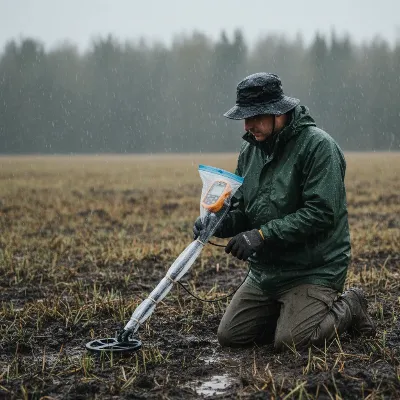 Person using metal detector in light rain with protected control box
Personal Wet Weather Gear
Staying dry and comfortable yourself is as important as protecting your equipment. Invest in good quality waterproof and windproof outerwear, including a jacket and trousers. Waterproof boots with excellent grip are essential for navigating muddy and slippery terrain. Waterproof gloves can keep your hands warm and dry, allowing for better dexterity when digging and handling finds. While not strictly necessary, waterproof headphones can be a worthwhile upgrade, ensuring you don’t miss any signals in noisy rain and protecting your standard headphones from water damage. A baseball cap or wide-brimmed hat can help keep raindrops out of your eyes and off your face, improving visibility and comfort.
Maintaining Your Detector After a Rainy Session
Proper care after a wet hunt is crucial for your detector’s longevity. Once your session is over, meticulously clean any mud, dirt, or debris from your coil, shaft, and control box. Use a soft, damp cloth for the control box, avoiding harsh chemicals. Pay special attention to coil connections and battery compartments, ensuring they are completely dry before storage. If any water has entered, gently dry it with a cloth or allow it to air dry in a warm, dry place. Remove batteries if storing for an extended period to prevent corrosion. Store your detector in a dry, temperate environment, preferably in a dedicated carry bag, to protect it from dust, moisture, and accidental damage. Periodically remove and clean scuff covers on your search coil to prevent mineralized dirt buildup, which can affect performance.
Optimizing Your Detector’s Performance in Wet Conditions
Rainy conditions can sometimes enhance detection, but they also require specific adjustments to your metal detector’s settings and techniques to maximize your chances of success.
Adjusting Settings
Wet, mineralized soil can be more “noisy” than dry ground, leading to an increase in false signals. To counteract this, consider reducing your detector’s sensitivity settings. This helps filter out ground mineralization and electrical interference, allowing you to focus on genuine targets. Ground balancing is even more critical in wet conditions. Perform a careful ground balance adjustment to calibrate your detector to the specific soil conditions, minimizing erroneous signals caused by the increased moisture and mineral content. Some detectors also allow for discrimination adjustments, which can be fine-tuned to ignore common junk metals that might become more pronounced in wet earth. Experiment with these settings to find the optimal balance for your location.
Techniques for Effective Rain Detecting
When the ground is wet and muddy, adopting specific techniques can improve your efficiency and success. Slower, more deliberate sweeps with your search coil are beneficial. This allows the detector more time to process signals in the more conductive soil and helps prevent false readings from rapid movements over uneven, wet ground. When you get a signal, pinpointing the target accurately is key, as muddy holes can quickly fill with water, making recovery difficult. Once you begin digging, be prepared for stickier, heavier soil. A good digging tool, like a robust spade or trowel, is essential. Consider using a screen or scoop to sift through the muddy earth, making it easier to separate your find from the muck. After recovery, you may need to clean your finds on-site before they become caked in dried mud, which can make identification harder later.
Leading Waterproof Metal Detector Brands and Models
For those serious about year-round detecting, especially in wet or even submerged environments, investing in a truly waterproof metal detector is a game-changer. Several reputable brands excel in this category, offering robust and high-performance machines.
Brands like Minelab, Garrett, Nokta, and XP Metal Detectors are well-known for their commitment to producing quality waterproof and submersible models. For example, the Minelab Equinox series (like the Equinox 800 or 900) and the Minelab Manticore are highly praised for their Multi-IQ technology, performing exceptionally well in wet sand, surf, and general rainy conditions. Nokta’s The Legend and Anfibio Multi detectors also offer impressive multi-frequency capabilities and deep waterproof ratings, making them versatile for both land and water hunting. Garrett’s AT Max and AT Pro models are popular choices for all-terrain use, including shallow water and heavy rain, thanks to their robust, waterproof designs. For advanced users seeking cutting-edge technology, the XP Deus II stands out with its fully waterproof design and fast multi-frequency performance, suitable for depths up to 66 feet. These models represent significant advancements, allowing detectorists to explore environments previously inaccessible to standard machines.
Legal and Ethical Considerations for Rainy Day Detecting
While the excitement of a rainy-day hunt can be intense, it’s crucial to remember and adhere to local laws and ethical guidelines for metal detecting. Regulations regarding where you can and cannot metal detect vary significantly by location, even more so when considering specific environments like beaches, parks, or historical sites. Always research and understand the local ordinances in your chosen detecting spot before you begin. Some areas may permit detecting but prohibit digging, or have specific rules about what you can keep.
Beyond legalities, ethical considerations dictate responsible behavior. Always fill your holes completely, leaving no trace of your activity. Respect private property and obtain permission before detecting on someone else’s land. If you uncover something of significant historical or archaeological value, report it to the appropriate authorities, as it may belong to the public domain or require professional conservation. Operating ethically ensures the hobby remains enjoyable and sustainable for everyone.
Conclusion
Embracing metal detecting in the rain can unlock a new realm of treasure-hunting possibilities, offering enhanced signal clarity and easier digging that dry conditions simply can’t match. By understanding your equipment’s waterproofing capabilities, implementing smart DIY protection for your control box, and dressing appropriately for the weather, you can safely extend your season and discover hidden gems. Remember to adjust your detector’s settings for wet ground, practice careful recovery techniques, and always prioritize safety, especially by avoiding thunderstorms. With a little preparation and respect for regulations, you’ll find that a rainy day is just another perfect opportunity to explore the fascinating world beneath our feet. So, with your gear protected and your spirits high, what forgotten treasures await your discovery after the next downpour?
Frequently Asked Questions
Is it better to metal detect after rain?
Many experienced detectorists prefer hunting after rain because the moisture significantly increases the soil’s electrical conductivity. This can lead to deeper target detection and clearer signals, making it easier to pinpoint buried items. Rain also softens the ground, making digging much less strenuous.
What happens if my metal detector gets wet?
If your metal detector, especially its control box, is not waterproof and gets wet, it can suffer severe electronic damage, leading to malfunctions or complete failure. While many search coils are waterproof, the sensitive components in the control unit are highly susceptible to moisture, which can cause corrosion and short circuits.
Can I use any metal detector in light rain?
Most modern metal detectors have waterproof search coils, but their control boxes often only offer water resistance, meaning they can handle light splashes but not prolonged or heavy rain. Always check your specific model’s manual for its water resistance rating, and consider using a protective cover or a DIY plastic bag for the control box.
How do I dry out my metal detector?
After a wet detecting session, thoroughly clean any mud and debris from your detector. Gently wipe down all components, paying close attention to the control box, battery compartment, and coil connections. Allow the detector to air dry completely in a warm, dry place, ensuring no moisture remains before storage to prevent damage or corrosion.
