Embarking on a quest to uncover lost history hidden beneath the earth’s surface is a thrilling adventure. For serious relic hunters, the right deep-seeking metal detector is not just a tool; it’s a gateway to uncovering ancient artifacts and historical treasures. This guide delves into the world of advanced metal detecting, specifically focusing on machines engineered to penetrate deep into the ground, identify elusive relics, and perform reliably in challenging environments. We will explore what makes a metal detector ideal for deep relic hunting, review the top five contenders, and provide essential tips to maximize your chances of finding those significant pieces of the past.
Metal Detector: Overview and Applications
A metal detector is an electronic instrument that uses an electromagnetic field to detect the presence of metal nearby. At its core, it consists of a stable oscillator producing an alternating current that passes through a coil, creating a fluctuating magnetic field. When this field encounters a metallic object, eddy currents are induced in the object, generating an opposing magnetic field that the detector senses, indicating a find.
The evolution of metal detectors has seen significant advancements since their early forms, initially developed for military applications. From simple beat-frequency oscillation (BFO) units to sophisticated Very Low Frequency (VLF) and Pulse Induction (PI) systems, modern metal detectors offer unparalleled precision and depth. VLF detectors operate on continuous wave signals, excelling in target identification and discrimination, which is crucial for distinguishing valuable relics from iron junk. PI detectors, on the other hand, send out short bursts of energy, making them highly effective in mineralized ground and offering superior depth capabilities, although with less discrimination. Multi-frequency detectors combine the strengths of various frequencies to adapt to diverse ground conditions and target types simultaneously.
Metal detectors serve a wide array of applications beyond hobby treasure hunting. They are vital in security for screening individuals and baggage, in construction for locating pipes and cables, in geology for mineral prospecting, and critically, in archaeology for locating historical sites and artifacts without extensive excavation. For the relic hunter, these advanced machines are essential for penetrating deeply buried layers of soil, often dense with mineralization or modern trash, to pinpoint significant historical finds.
Buying Guide: Key Factors to Consider for Relic Hunting
Choosing the perfect deep-seeking metal detector for relic hunting requires careful consideration of several important factors. These machines are often a significant investment, and selecting one tailored to your specific needs and hunting grounds will greatly enhance your success.
Budget
|
Our Picks for the Best Metal Detector in 2026
As an Amazon Associate I earn from qualifying purchases.
|
||
| Num | Product | Action |
|---|---|---|
| 1 | SUNPOW Metal Detector for Adults & Kids, Kids Metal Detector kit Waterproof for Gold Detecting, Stable Anti-Interference, Higher Accuracy, Bigger LCD Display, 4 Modes, 8" Search Coil, MD13 |

|
| 2 | Bounty Hunter TK4 Tracker IV Metal Detector – All-Terrain Gold, Silver, Coin & Relic Finder with 8" Waterproof Coil, 3 Detection Modes – for Adults & Kids – Made in USA |
|
| 3 | DR.ÖTEK Metal Detector for Adults, Professional Metal Detectors Waterproof with 10" IP68 Coil, Larger LCD Display, High Accuracy for Gold & Silver Detection & Beach Treasure Hunting, Beginner Friendly |
|
| 4 | Metal Detector for Adults Professional, Waterproof Pinpoint, High Accuracy Gold and Silver Detection, Underwater and Beach Use, 10'' IP68 Coil, Bigger LCD, New Advanced DSP Chip, Black |
|
| 5 | 2026 Latest Metal Detector for Adults, Professional Waterproof & Adjustable Stem, Higher Accuracy Gold Detector with LCD, Advanced DSP Chip, 2.26 Pounds Lightweight Suitable for Beach and Backyard |
|
| 6 | Professional Metal Detector for Adults,12" IP68 Waterproof Search Coil with LCD Backlight,5 Modes Gold Detector,Advanced DSP Chip&High Accuracy System for Beach/Gold Hunting |
|
| 7 | GoGonova Metal Detector for Adults & Kids, Kids Metal Detector, Waterproof Metal Detectors with High Accuracy Lightweight 8" Search Coil, All Metal & Disc Modes for Junior & Youth Gold Detector |
|
| 8 | PANCKY Metal Detectors for Adults Waterproof, Professional Higher Accuracy Gold Detector with LCD Display, 5 Mode, Advanced DSP Chip 10" Coil, PK0075 |
|
| 9 | PANCKY Metal Detectors for Adults Waterproof, Professional Higher Accuracy Gold Detector with LCD Display, 5 Mode, Advanced DSP Chip 10" Coil, PK0075 |
|
| 10 | SUNPOW Metal Detector for Adults Professional - High Accuracy with 12" Waterproof Coil, 2x Backlit LCD Display, Advanced DSP Chip, 5 Modes, Adjustable Length (19"-59"), Sturdy Spiral Structure -OTMD14 |
|
The price of metal detectors varies widely, influenced by technology, features, and brand reputation. Entry-level models typically fall under $300, offering basic functionality suitable for beginners or casual coin shooting. Mid-range detectors, priced between $300 and $800, provide a good balance of performance and features, often including multi-frequency capabilities and improved discrimination. However, serious deep relic hunting usually demands advanced models in the high-end category, ranging from $800 to several thousand dollars. These premium machines boast sophisticated multi-frequency or pulse induction systems, superior ground balancing, advanced discrimination, and robust build quality necessary for challenging environments and the deepest targets. Investing in a higher-end model often translates to better depth, sensitivity, and target separation, which are indispensable for uncovering valuable, deeply buried relics.
Purpose of Use
Your primary purpose, deep relic hunting, dictates specific feature requirements. For uncovering historical artifacts, often found at greater depths and in older, trash-laden sites, depth penetration and excellent target separation are paramount. Look for detectors with powerful multi-frequency or Pulse Induction technology, as these are designed to cut through mineralization and reach deeper targets. Advanced discrimination capabilities are also critical, allowing you to filter out common iron junk while still detecting valuable ferrous relics like old tools or weaponry. Adjustable recovery speed is another vital feature for relic hunters, enabling the detector to quickly process signals from closely spaced targets, preventing valuable items from being masked by adjacent trash.
Location of Use
Relic hunting often takes place in diverse and challenging environments, from ancient battlefields and ghost towns to old homesteads and former campsites. These locations frequently feature highly mineralized soil, dense vegetation, and significant amounts of modern iron trash. A detector with robust ground-balancing capabilities is essential to mitigate false signals from ground mineralization, ensuring accurate target identification. Waterproofing is also a valuable feature, allowing for hunting in wet sand, shallow water, or during inclement weather, as many historical sites are near bodies of water. The ability to swap out different sized search coils can also be beneficial; larger coils generally offer greater depth for wide-open areas, while smaller coils provide better target separation in trash-heavy spots.
User Experience
Deep relic hunting is often pursued by detectorists with some level of experience, as the advanced features and nuanced audio responses of high-performance machines can be complex. While some top models offer user-friendly interfaces with preset modes, mastering their full potential usually requires a deeper understanding of settings like sensitivity, discrimination, threshold, and ground balance. Beginners interested in deep relic hunting might consider starting with a versatile, upper-mid-range multi-frequency detector that offers both simplicity and room to grow. Experienced hunters will appreciate machines with extensive customization options, allowing them to fine-tune settings for specific ground conditions and target preferences, ultimately leading to more successful and precise relic recovery.
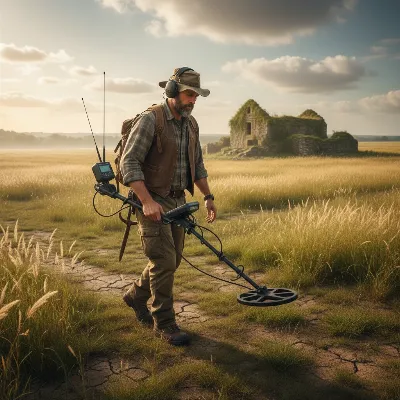 A focused metal detectorist actively searching a historical field with a deep-seeking metal detector for relics.
Top 5 Best Deep Seeking Metal Detectors for Relics
For those dedicated to unearthing history, selecting a metal detector that offers superior depth, discrimination, and performance in varied ground conditions is paramount. Here are five of the best deep-seeking metal detectors highly regarded by relic hunters.
1. Minelab Manticore
The Minelab Manticore stands out as a formidable all-purpose machine, exceptionally suited for deep relic hunting. It employs Minelab’s revolutionary Multi-IQ+ technology, which processes signals with over 50% more power than its predecessors, delivering incredible depth and enhanced target separation. This detector is versatile enough for all ground types, from highly mineralized fields to salt-water beaches, making it a favorite among enthusiasts. The Manticore is fully submersible up to 16 feet, adding to its flexibility for diverse hunting locations. It comes with over 10 preset search modes and allows for up to 10 personalized modes, giving relic hunters extensive control over their search parameters. Its lightweight, ergonomic design ensures comfort during long hours in the field.
- Key Features for Relics: Multi-IQ+ simultaneous multi-frequency, superior target separation, excellent depth (approx. 11 inches standard, deeper for larger targets), high definition LCD with target ID, waterproof to 16 feet.
- Pros: Unmatched discrimination and target ID in complex environments, exceptional depth, extremely versatile, robust build.
- Cons: Higher price point, a learning curve for advanced settings.
2. XP Deus II
The XP Deus II is renowned for its speed and elite target separation, making it an excellent choice for relic hunters, especially in iron-infested or trashy sites. Its Fast Multi-Frequency (FMF) technology allows it to operate across a broad spectrum of frequencies simultaneously, providing unparalleled performance on land and underwater. The Deus II excels at identifying valuable relics even when they are closely masked by iron or other undesirable targets. Its lightweight, wireless design, including wireless headphones and a remote control, offers exceptional comfort and maneuverability. This detector is fully waterproof up to 66 feet, making it suitable for both land and underwater relic recovery.
- Key Features for Relics: FMF simultaneous multi-frequency, elite target separation and fast recovery speed, advanced audio nuances for target identification, waterproof to 66 feet, lightweight and wireless.
- Pros: Outstanding performance in trashy ground, incredibly fast, highly ergonomic and portable.
- Cons: Premium price, can be complex to master its many settings.
3. Nokta Legend 2 (Pro-Pack)
The Nokta Legend 2 (often available as a Pro-Pack with multiple coils) is an outstanding multi-frequency detector offering high-end performance at a competitive price, making it an excellent value for relic hunters. It features Simultaneous Multi-Frequency (SMF) technology, allowing it to perform admirably in various ground conditions, including dry or wet sand, and heavily mineralized soil. A standout feature for relic hunters is its innovative “FerroCheck” and adjustable iron volume, which helps to differentiate valuable ferrous relics from iron junk. The Legend 2 is waterproof up to 10 feet, capable of handling shoreline and shallow water relic hunting. Its user-friendly interface and robust construction appeal to both experienced and aspiring relic hunters.
- Key Features for Relics: SMF multi-frequency, excellent target separation, adjustable iron volume, multiple search modes, waterproof to 10 feet, good depth (approx. 12 inches).
- Pros: Great value for a multi-frequency detector, strong performance in varied conditions, useful iron control features.
- Cons: Not as deep as top-tier PI machines, slightly less discrimination nuance than the Manticore or Deus II.
4. Minelab Equinox 900
The Minelab Equinox 900 builds upon the success of the popular Equinox series, offering enhanced features that make it a powerful tool for deep relic hunting. Utilizing Multi-IQ technology, it provides versatile performance across all terrains, from fields to beaches. The Equinox 900 offers six single frequencies (4, 5, 10, 15, 20, 40 kHz) plus multi-frequency mode, giving relic hunters flexibility to adapt to different target sizes and ground conditions. It features improved target ID resolution and faster recovery speed than previous models, helping to discern valuable finds from trash. The detector is fully submersible up to 16 feet and comes with two search coils (11-inch and 6-inch), providing options for both deep coverage and pinpointing in tight spots.
- Key Features for Relics: Multi-IQ technology, wide frequency range, improved target ID resolution and recovery speed, waterproof to 16 feet, includes two coils.
- Pros: Excellent all-around performance, good depth and sensitivity, versatile for different hunting scenarios, strong community support.
- Cons: Can be challenging to master all settings for optimal performance in extreme conditions.
5. Minelab GPZ 7000
While primarily known as the ultimate gold prospecting machine, the Minelab GPZ 7000 is an exceptional deep-seeking metal detector whose capabilities extend to very large, deeply buried relics. It employs Zero Voltage Transmission (ZVT) technology, which allows it to find gold at “unquestionably deeper” depths than any other detector on the market, a characteristic that also benefits the discovery of significant, large relics. Its Super-D Smart Search Coil dramatically reduces interference from highly mineralized soil, a common challenge in relic hunting. The GPZ 7000 is a Pulse Induction (PI) machine, known for its ability to penetrate deep, even in challenging ground. For those specifically targeting very large, deeply interred historical artifacts, its unparalleled depth makes it a serious contender, despite its gold-specific tuning.
- Key Features for Relics: ZVT technology for extreme depth, Super-D Smart Search Coil for mineralized ground, Pulse Induction system, excellent for very deep and large targets.
- Pros: Unmatched depth, superior performance in highly mineralized ground, highly sensitive to conductors.
- Cons: Very high price, heavy (7.32 lbs), coil and shaft only waterproof to 3 feet (control box is not), primarily optimized for gold, less target discrimination than VLF/Multi-IQ for small iron relics.
| Detector Model | Technology | Key Relic Features | Max Depth (Approx.) | Waterproof Rating | Weight (lbs) |
|---|---|---|---|---|---|
| Minelab Manticore | Multi-IQ+ | Superior separation, versatile | 11+ inches | 16 ft (5m) | 2.9 |
| XP Deus II | FMF Multi-Frequency | Elite separation, fast recovery | 10+ inches | 66 ft (20m) | 1.7 (approx.) |
| Nokta Legend 2 | SMF Multi-Frequency | Iron volume control, all-terrain performance | 12 inches | 10 ft (3m) | 3.0 |
| Minelab Equinox 900 | Multi-IQ | Wide frequency range, enhanced target ID | 11+ inches | 16 ft (5m) | 2.8 |
| Minelab GPZ 7000 | ZVT Pulse Induction | Extreme depth, excels in mineralized soil | Up to 2.5 ft | Coil/Shaft 3 ft (1m) | 7.32 |
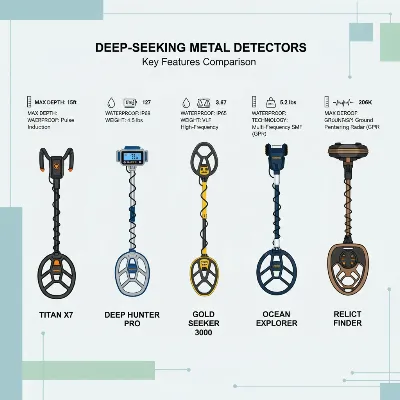 Illustration comparing features of advanced deep-seeking metal detectors for historical relic hunting.
Tips and Tricks for Maximizing Your Relic Finds
Beyond selecting the right deep-seeking metal detector, mastering its use and understanding the nuances of relic hunting environments can significantly increase your success rate.
How to Use Your Metal Detector Effectively
Effective metal detecting for relics requires patience, skill, and a strategic approach. Start by setting your detector’s discrimination to carefully filter out unwanted targets, such as common iron trash, while ensuring you don’t miss valuable ferrous relics like old tools or Civil War bullets. Experiment with sensitivity settings; higher sensitivity can detect deeper targets but might also increase ground noise in mineralized areas. Ground balance your machine regularly, especially when moving between different soil types, to maintain optimal performance and depth. When sweeping, use slow, overlapping movements to ensure thorough coverage of your search area. Pay close attention to subtle audio cues and target ID numbers, as these can provide critical information about the buried object before you dig. In heavily trash-laden sites, a fast recovery speed setting will help your detector differentiate between closely spaced targets.
Metal Detector Maintenance for Longevity
Proper maintenance is crucial for ensuring the longevity and reliable performance of your deep-seeking metal detector. After each use, especially in dirty or wet conditions, clean your search coil and shaft with a damp cloth to remove dirt, mud, or salt residue. Always check and clean all connections to prevent corrosion and ensure consistent electrical contact. Store your detector in a dry, temperate environment, preferably disassembled or in a padded case, to protect it from physical damage and extreme temperatures. Pay attention to battery life and consider carrying spare batteries or a portable power bank for extended hunts. Regularly inspect your cables and coils for any signs of wear or damage, replacing components as needed to prevent unexpected failures in the field.
Laws and Regulations Related to Metal Detecting
Understanding and adhering to local, state, and national laws regarding metal detecting is non-negotiable for relic hunters. Many historical sites, national parks, and archaeological preserves are protected, and detecting in these areas may be illegal without specific permits or can lead to severe penalties. Always obtain permission before searching on private land. Respect property rights and avoid disturbing environmentally sensitive areas. In some regions, found artifacts, particularly those of historical significance, may need to be reported to local authorities or archaeological institutions. Familiarizing yourself with these regulations not only ensures you hunt legally and ethically but also contributes to the responsible preservation of our shared heritage.
“Relic hunting is more than just finding objects; it’s about connecting with history. The right detector opens doors to stories buried deep beneath our feet.” – Dr. Alistair Finch, Historical Archaeologist and Lead Detectorist
Buying Guide: Reputable Metal Detector Brands for Relic Hunters
The market for deep-seeking metal detectors is dominated by several reputable brands known for their innovation, reliability, and performance. When choosing a detector for serious relic hunting, considering these established manufacturers can provide confidence in your investment.
Minelab: An Australian company, Minelab is a global leader in metal detecting technology, particularly renowned for its multi-frequency (Multi-IQ, Multi-IQ+) and pulse induction (ZVT) systems. Their detectors, like the Manticore and GPZ 7000, are highly sought after for their exceptional depth, advanced discrimination, and ability to perform in challenging, mineralized ground, making them top choices for serious relic and gold hunters worldwide.
XP Metal Detectors: Hailing from France, XP is celebrated for its lightweight, wireless, and technologically advanced detectors such as the XP Deus II. Their focus on fast recovery speed and elite target separation makes them ideal for relic hunting in trash-heavy environments where distinguishing valuable targets from iron is crucial. XP detectors are known for their ergonomic design and user-friendly, yet powerful, features.
Nokta: A Turkish brand, Nokta has rapidly gained popularity for offering high-performance metal detectors with excellent value. Their multi-frequency machines, like the Nokta Legend series, provide impressive depth and discrimination capabilities, often incorporating innovative features such as adjustable iron volume. Nokta detectors are known for their robust build quality and suitability for a wide range of detecting applications, including relic and beach hunting.
Garrett Metal Detectors: An American company with a long history in the industry, Garrett offers a diverse range of detectors, from beginner-friendly models to advanced professional units. While some of their models are excellent for all-around treasure hunting, machines like the Garrett AT series are favored for their durability and performance in varying ground conditions, making them a solid choice for general relic hunting.
Fisher Research Labs: One of the oldest names in the metal detecting industry, Fisher has a legacy of producing reliable and effective detectors. While their lineup includes models for various purposes, some Fisher detectors are praised for their sensitivity to small targets and their robust construction, making them suitable for specific relic hunting scenarios, particularly where small, valuable artifacts are expected.
These brands consistently innovate, pushing the boundaries of what metal detectors can achieve, providing relic hunters with powerful tools to uncover the secrets of the past.
Conclusion
The pursuit of deeply buried relics is a captivating journey that blends historical curiosity with the thrill of discovery. Choosing the right deep-seeking metal detector is your most critical decision, as it empowers you to cut through layers of time and earth to connect with lost stories. Whether you prioritize the unparalleled depth of a Minelab GPZ 7000 for large, elusive targets, the advanced separation of an XP Deus II for trashy sites, or the versatile power of a Minelab Manticore for all-around relic hunting, each top contender offers unique advantages.
By understanding the key factors in detector selection—budget, purpose, location, and user experience—and by diligently applying effective hunting and maintenance techniques, you are well-equipped to embark on successful relic recovery expeditions. Remember always to hunt ethically and legally, respecting the historical significance of your finds and the regulations governing their recovery. With the right deep-seeking metal detector in hand, you are not just finding metal; you are uncovering pieces of human history, one profound signal at a time. What ancient secrets are waiting for you to unearth next?
Frequently Asked Questions
What makes a metal detector “deep seeking” for relics?
A deep-seeking metal detector typically features advanced technologies like multi-frequency (simultaneous or selectable) or pulse induction (PI). These technologies allow the detector to penetrate deeper into mineralized ground and differentiate between targets at greater depths, crucial for finding older, deeply buried relics that often lie beyond the reach of standard detectors.
Can beginners effectively use deep-seeking metal detectors for relics?
While some deep-seeking detectors have user-friendly modes, many high-performance models have advanced settings that require experience to master. Beginners can start with versatile multi-frequency detectors like the Minelab Equinox 900 or Nokta Legend 2, which offer a good balance of performance and ease of use, allowing for growth into more complex features.
Is a waterproof metal detector necessary for relic hunting?
A waterproof metal detector is highly beneficial for relic hunting, as many historical sites are located near bodies of water or in environments prone to wet conditions. Full waterproofing allows you to search in wet sand, shallow rivers, or even dive for submerged relics, significantly expanding your hunting opportunities.
How important is target discrimination for deep relic hunting?
Target discrimination is extremely important for deep relic hunting. Older sites are often littered with iron trash, and effective discrimination allows your detector to filter out unwanted junk while still identifying valuable targets, including specific ferrous relics you might want to recover. Advanced discrimination, sometimes paired with adjustable iron volume, saves time and effort.
What is the ideal frequency range for finding deep relics?
For deep relics, a multi-frequency detector that uses a range of frequencies simultaneously or allows selection between low and high frequencies is ideal. Lower frequencies (e.g., 5-10 kHz) generally penetrate deeper and are good for larger targets, while higher frequencies (e.g., 20-40 kHz) are more sensitive to smaller relics. Pulse Induction (PI) detectors, which operate differently, are also excellent for depth in mineralized ground.
