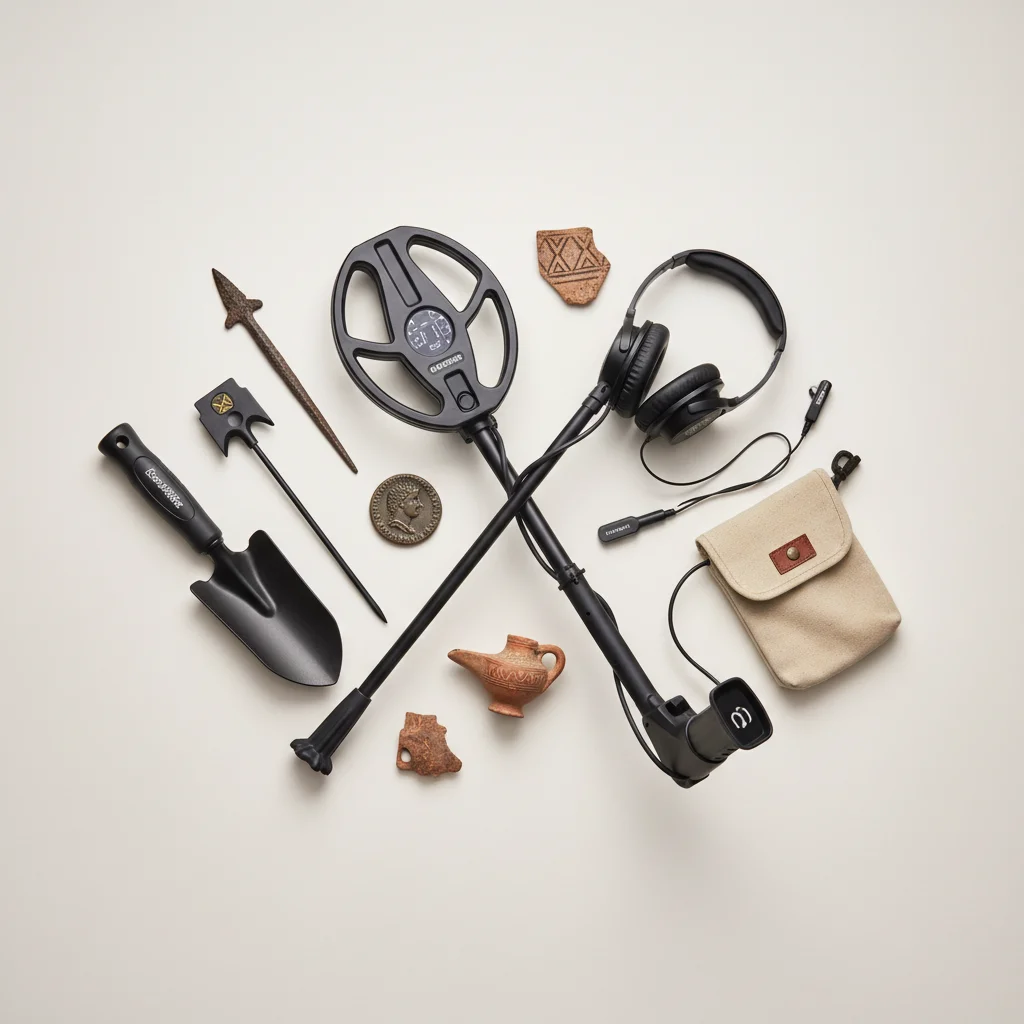
Finding ancient artifacts with a metal detector is a thrilling pursuit that requires a blend of knowledge, patience, and the right techniques. While there’s no guaranteed method to unearth a specific historical treasure, employing strategic approaches significantly increases your chances. This guide will walk you through the essential steps, from choosing your location to understanding signals, helping you uncover relics from the past.
Choosing Promising Locations for Ancient Finds
The first step in your quest for ancient artifacts is selecting the right location. Historical maps, old property records, and local historical societies can provide invaluable clues about past settlements, battlefields, or trade routes. Look for areas near old churches, abandoned homesteads, or former public gathering spots. Riverbanks and old creek beds can also be productive, as water erosion often exposes buried items. Always ensure you have permission to detect on private land and are aware of any local regulations regarding historical sites.
Consider areas that have seen significant human activity over long periods. Roman roads, medieval village sites, or even areas where ancient coins might have been lost during daily commerce are prime targets. Researching the specific history of your chosen region can narrow down your search and make it more efficient.
Essential Equipment for Artifact Hunting
While many metal detectors can find artifacts, some features are more beneficial for this specific pursuit. A detector with good discrimination capabilities is crucial to filter out modern junk and focus on older, potentially valuable targets. Look for models with adjustable ground balance, which helps in mineralized soils often found in older sites. A pinpointing feature is also highly recommended to accurately locate targets before digging, minimizing damage to potential artifacts.
- A high-frequency VLF or multi-frequency detector for better sensitivity to small, non-ferrous targets.
- A sturdy digging tool, such as a trowel or spade, appropriate for the soil conditions.
- A small brush or soft cloth for initial cleaning of delicate finds.
- A GPS device or smartphone app to mark your finds and track your search area.
- Protective gloves and a finds pouch to safely store your discoveries.
Mastering Metal Detector Settings for Relics
|
Our Picks for the Best Metal Detector in 2026
As an Amazon Associate I earn from qualifying purchases.
|
||
| Num | Product | Action |
|---|---|---|
| 1 | SUNPOW Metal Detector for Adults & Kids, Kids Metal Detector kit Waterproof for Gold Detecting, Stable Anti-Interference, Higher Accuracy, Bigger LCD Display, 4 Modes, 8" Search Coil, MD13 |

|
| 2 | Metal Detector for Adults Professional, Waterproof Pinpoint, High Accuracy Gold and Silver Detection, Underwater and Beach Use, 10'' IP68 Coil, Bigger LCD, New Advanced DSP Chip, Black |
|
| 3 | PANCKY Metal Detectors for Adults Waterproof, Professional Higher Accuracy Gold Detector with LCD Display, 5 Mode, Advanced DSP Chip 10" Coil, PK0075 |
|
| 4 | SUNPOW Metal Detector for Adults Professional - High Accuracy with 12" Waterproof Coil, 2x Backlit LCD Display, Advanced DSP Chip, 5 Modes, Adjustable Length (19"-59"), Sturdy Spiral Structure -OTMD14 |
|
| 5 | PANCKY Metal Detectors for Adults Waterproof, Professional Higher Accuracy Gold Detector with LCD Display, 5 Mode, Advanced DSP Chip 10" Coil, PK0075 |
|
| 6 | DR.ÖTEK Metal Detector for Adults, Professional Metal Detectors Waterproof with 10" IP68 Coil, Larger LCD Display, High Accuracy for Gold & Silver Detection & Beach Treasure Hunting, Beginner Friendly |
|
| 7 | Bounty Hunter TK4 Tracker IV Metal Detector – All-Terrain Gold, Silver, Coin & Relic Finder with 8" Waterproof Coil, 3 Detection Modes – for Adults & Kids – Made in USA |
|
| 8 | Professional Metal Detector for Adults,12" IP68 Waterproof Search Coil with LCD Backlight,5 Modes Gold Detector,Advanced DSP Chip&High Accuracy System for Beach/Gold Hunting |
|
| 9 | 2026 Latest Metal Detector for Adults, Professional Waterproof & Adjustable Stem, Higher Accuracy Gold Detector with LCD, Advanced DSP Chip, 2.26 Pounds Lightweight Suitable for Beach and Backyard |
|
| 10 | GoGonova Metal Detector for Adults & Kids, Kids Metal Detector, Waterproof Metal Detectors with High Accuracy Lightweight 8" Search Coil, All Metal & Disc Modes for Junior & Youth Gold Detector |
|
Optimizing your metal detector’s settings is paramount when searching for ancient artifacts. Start by setting your discrimination to a lower level than you might for coin shooting, as many older artifacts are made of iron or have iron components that you don’t want to filter out. Experiment with different sensitivity levels; too high, and you might get false signals from ground mineralization; too low, and you could miss deep targets. Ground balancing is critical, especially in areas with varying soil conditions, to ensure stable operation and accurate target identification.
Pay close attention to the audio tones and visual IDs your detector provides. Older, hand-wrought items often have irregular shapes and may produce different signals than modern, uniform objects. Learning to interpret these subtle differences comes with practice and experience.
Effective Search Patterns and Digging Techniques
Employing a systematic search pattern is more effective than random wandering. A grid pattern, where you walk in parallel lines covering the entire area, ensures thorough coverage. Overlap each pass slightly to avoid missing targets between sweeps. Sweep your coil slowly and deliberately, keeping it as close to the ground as possible without dragging. This maximizes depth and signal strength.
When you get a solid signal, use your pinpointing feature to narrow down the target’s exact location. Dig carefully, creating a neat plug of earth that can be easily replaced. If the artifact is delicate, use a smaller tool or even your hands for the final extraction. Document your finds with photos and GPS coordinates before cleaning them, as this information can be valuable for historical research.
Preserving and Documenting Your Finds
Once an artifact is unearthed, its preservation becomes crucial. Avoid aggressive cleaning methods that could damage the item. For most finds, a gentle brushing off of loose dirt is sufficient in the field. If the artifact appears fragile, wrap it carefully in tissue or soft cloth before placing it in your finds pouch. At home, further research into the type of material will guide appropriate cleaning and conservation methods. Always remember to document your finds, noting the date, location, and any relevant details. This not only helps you track your discoveries but can also contribute to archaeological knowledge.
