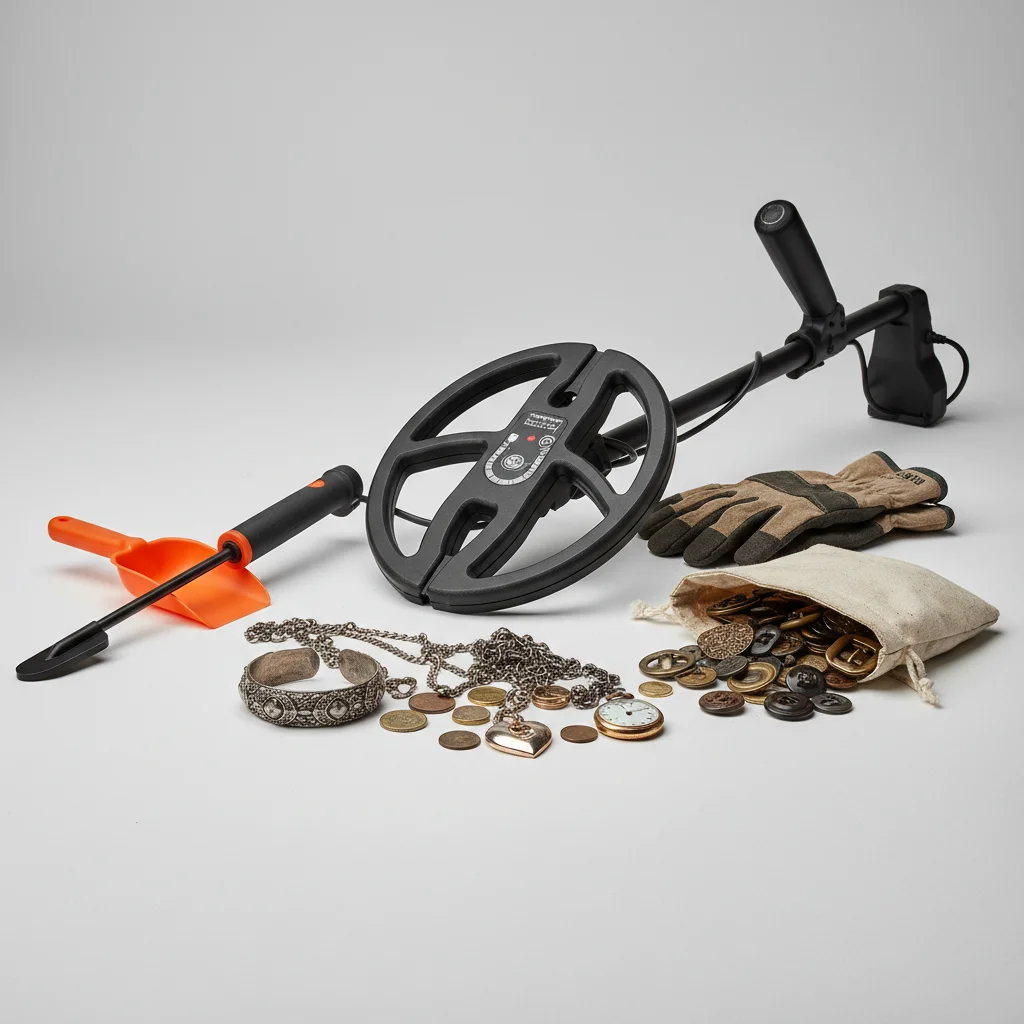
Finding lost jewelry with a metal detector is a rewarding pursuit that combines patience with the right techniques. Employing specific strategies can significantly increase your chances of recovering precious items. This guide will walk you through the essential steps and considerations for successful jewelry recovery, focusing on common scenarios and effective search patterns.
Understanding Your Search Environment
The first step in finding lost jewelry is to understand where it’s most likely to be found. Beaches, parks, and old picnic areas are prime locations. On beaches, focus on the ‘towel line’ where people typically relax, and the ‘wet sand’ area where waves deposit items. In parks, look around benches, playgrounds, and popular walking paths. Consider the history of the location; older sites often yield more vintage pieces.
Different types of jewelry will be lost in different environments. Rings and earrings are common beach finds, while pendants and chains might be found in grassy areas. Always research local regulations regarding metal detecting before you begin your search to avoid any legal issues.
Essential Metal Detecting Techniques for Jewelry
Effective metal detecting for jewelry involves more than just swinging a coil. Start with a slow, overlapping sweep pattern to ensure no area is missed. A grid pattern is highly recommended for thorough coverage. Adjust your detector’s sensitivity; too high, and you’ll get false signals from mineralized ground; too low, and you might miss smaller, deeper targets. Ground balancing is crucial, especially on beaches with varying sand conditions.
- Use a small, concentric coil for better target separation in trashy areas.
- Employ a ‘wiggle’ technique over a target to determine its size and shape.
- Dig carefully and methodically to avoid damaging the item.
- Always fill your holes and leave the area as you found it.
- Consider using a pinpointer for precise target location once a signal is detected.
Interpreting Signals and Target ID
|
Our Picks for the Best Metal Detector in 2026
As an Amazon Associate I earn from qualifying purchases.
|
||
| Num | Product | Action |
|---|---|---|
| 1 | Metal Detector for Adults Professional, Waterproof Pinpoint, High Accuracy Gold and Silver Detection, Underwater and Beach Use, 10'' IP68 Coil, Bigger LCD, New Advanced DSP Chip, Black |

|
| 2 | 2026 Latest Metal Detector for Adults, Professional Waterproof & Adjustable Stem, Higher Accuracy Gold Detector with LCD, Advanced DSP Chip, 2.26 Pounds Lightweight Suitable for Beach and Backyard |
|
| 3 | SUNPOW Metal Detector for Adults & Kids, Kids Metal Detector kit Waterproof for Gold Detecting, Stable Anti-Interference, Higher Accuracy, Bigger LCD Display, 4 Modes, 8" Search Coil, MD13 |
|
| 4 | DR.ÖTEK Metal Detector for Adults, Professional Metal Detectors Waterproof with 10" IP68 Coil, Larger LCD Display, High Accuracy for Gold & Silver Detection & Beach Treasure Hunting, Beginner Friendly |
|
| 5 | PANCKY Metal Detectors for Adults Waterproof, Professional Higher Accuracy Gold Detector with LCD Display, 5 Mode, Advanced DSP Chip 10" Coil, PK0075 |
|
| 6 | GoGonova Metal Detector for Adults & Kids, Kids Metal Detector, Waterproof Metal Detectors with High Accuracy Lightweight 8" Search Coil, All Metal & Disc Modes for Junior & Youth Gold Detector |
|
| 7 | PANCKY Metal Detectors for Adults Waterproof, Professional Higher Accuracy Gold Detector with LCD Display, 5 Mode, Advanced DSP Chip 10" Coil, PK0075 |
|
| 8 | SUNPOW Metal Detector for Adults Professional - High Accuracy with 12" Waterproof Coil, 2x Backlit LCD Display, Advanced DSP Chip, 5 Modes, Adjustable Length (19"-59"), Sturdy Spiral Structure -OTMD14 |
|
| 9 | Professional Metal Detector for Adults,12" IP68 Waterproof Search Coil with LCD Backlight,5 Modes Gold Detector,Advanced DSP Chip&High Accuracy System for Beach/Gold Hunting |
|
| 10 | Bounty Hunter TK4 Tracker IV Metal Detector – All-Terrain Gold, Silver, Coin & Relic Finder with 8" Waterproof Coil, 3 Detection Modes – for Adults & Kids – Made in USA |
|
Modern metal detectors offer various ways to interpret signals, including audio tones and visual target IDs. Gold and silver jewelry often produce distinct tones and VDI (Very Discriminative Indication) numbers. Gold typically falls within a specific range, often overlapping with pull tabs, which can be frustrating. Silver, being more conductive, usually gives a higher, more stable reading.
Practice is key to distinguishing valuable targets from junk. Spend time learning the sounds your detector makes for different metals. Digging all repeatable signals, especially when starting out, will help you build a mental library of target responses. Target ID can be affected by depth, ground mineralization, and the orientation of the object.
Choosing the Right Equipment for Jewelry Hunting
While many metal detectors can find jewelry, some are better suited for the task. Look for models with good target separation, multiple frequencies, and excellent ground balancing capabilities. Waterproof coils are essential for beach hunting. A good quality pinpointer is invaluable for quickly locating small items in the plug of dirt you dig.
Consider these features when selecting your gear:. A sturdy digging tool, a sand scoop (for beaches), and a finds pouch are indispensable accessories. Wear comfortable clothing and sun protection if you’re spending extended time outdoors.
Advanced Tips for Maximizing Your Finds
To truly excel at finding lost jewelry, consider these advanced tips. Hunt after storms on beaches, as wave action can uncover new targets. Research historical events or popular gathering spots in your area. Join local metal detecting clubs; experienced members can offer invaluable advice and share knowledge of productive locations. Always be persistent; not every outing will yield a treasure, but every outing is a learning experience.
Responsible detecting is paramount. Always obtain permission before searching private property and adhere to all public land regulations. Your dedication to ethical practices ensures the hobby remains enjoyable for everyone. For more advanced tools and accessories, check out.
Frequently Asked Questions
What are the best locations for finding lost jewelry with a metal detector?
The best locations for finding lost jewelry are typically beaches, parks, and old picnic areas. On beaches, focus on the 'towel line' and 'wet sand' areas where items are frequently lost or deposited by waves. In parks, search around benches, playgrounds, and popular walking paths.
How can I improve my metal detector's accuracy for jewelry?
To improve accuracy, use a slow, overlapping sweep pattern and a grid pattern for thorough coverage. Adjust your detector's sensitivity to avoid false signals and perform ground balancing, especially in varied conditions like beaches. A small, concentric coil can also enhance target separation.
What kind of signals do gold and silver jewelry produce on a metal detector?
Gold and silver jewelry often produce distinct audio tones and VDI (Very Discriminative Indication) numbers. Gold typically falls within a specific VDI range, sometimes overlapping with pull tabs, while silver, being more conductive, usually gives a higher, more stable reading. Practice helps distinguish these signals.
What essential equipment is needed for successful jewelry hunting?
For successful jewelry hunting, you need a metal detector with good target separation and ground balancing, preferably with waterproof coils for beach use. A high-quality pinpointer is invaluable for precise target location. Additionally, a sturdy digging tool, a sand scoop, and a finds pouch are essential accessories.
Are there any advanced tips for maximizing jewelry finds?
To maximize jewelry finds, consider hunting beaches after storms, as wave action can uncover new targets. Research historical events or popular gathering spots in your area for potential older finds. Joining local metal detecting clubs can also provide invaluable advice and knowledge of productive locations.
How to Find Lost Jewelry with a Metal Detector
This guide outlines the essential steps and techniques for successfully locating and recovering lost jewelry using a metal detector.
Identify prime locations such as beaches, parks, and old picnic areas. On beaches, focus on the 'towel line' and 'wet sand' areas. In parks, search around benches, playgrounds, and walking paths, considering the history of the site for older pieces.
Use a slow, overlapping sweep pattern, ideally a grid, for thorough coverage. Adjust your detector's sensitivity and perform ground balancing, especially on beaches. A small, concentric coil can improve target separation in trashy areas.
Learn to distinguish audio tones and VDI numbers for gold and silver jewelry. Gold typically has a specific range, while silver gives a higher, more stable reading. Practice by digging all repeatable signals to build a mental library of target responses.
Select a metal detector with good target separation, multiple frequencies, and excellent ground balancing. Waterproof coils are crucial for beach hunting. A quality pinpointer, sturdy digging tool, sand scoop, and finds pouch are also indispensable accessories.
Hunt after storms on beaches to uncover new targets. Research historical events and popular gathering spots. Join local metal detecting clubs for advice and location knowledge. Always be persistent and practice responsible detecting by obtaining permission and adhering to regulations.

The guide had some solid points, especially about understanding your search environment. I tried the park strategy around benches, but honestly, I didn’t have much luck. Maybe it’s just my local park, or I need a better detector. Still, the advice on considering the history of a location was helpful for planning future hunts.
I’m pretty new to metal detecting, and I was feeling a bit overwhelmed. The section on effective search patterns really simplified things for me. I’ve been using the grid pattern in a local park, and while I haven’t found any gold yet, I’ve definitely recovered some interesting coins. It’s a good starting point for beginners like me who are trying to get into finding lost jewelry.
I’ve been detecting for years, but the tip about focusing on the ‘towel line’ at beaches was a game-changer for me. I always just scanned the wet sand, but since reading this, I’ve found two rings in the drier, upper beach area. It really makes sense when you think about where people are actually sitting and taking things off. Great advice for anyone serious about finding lost jewelry.