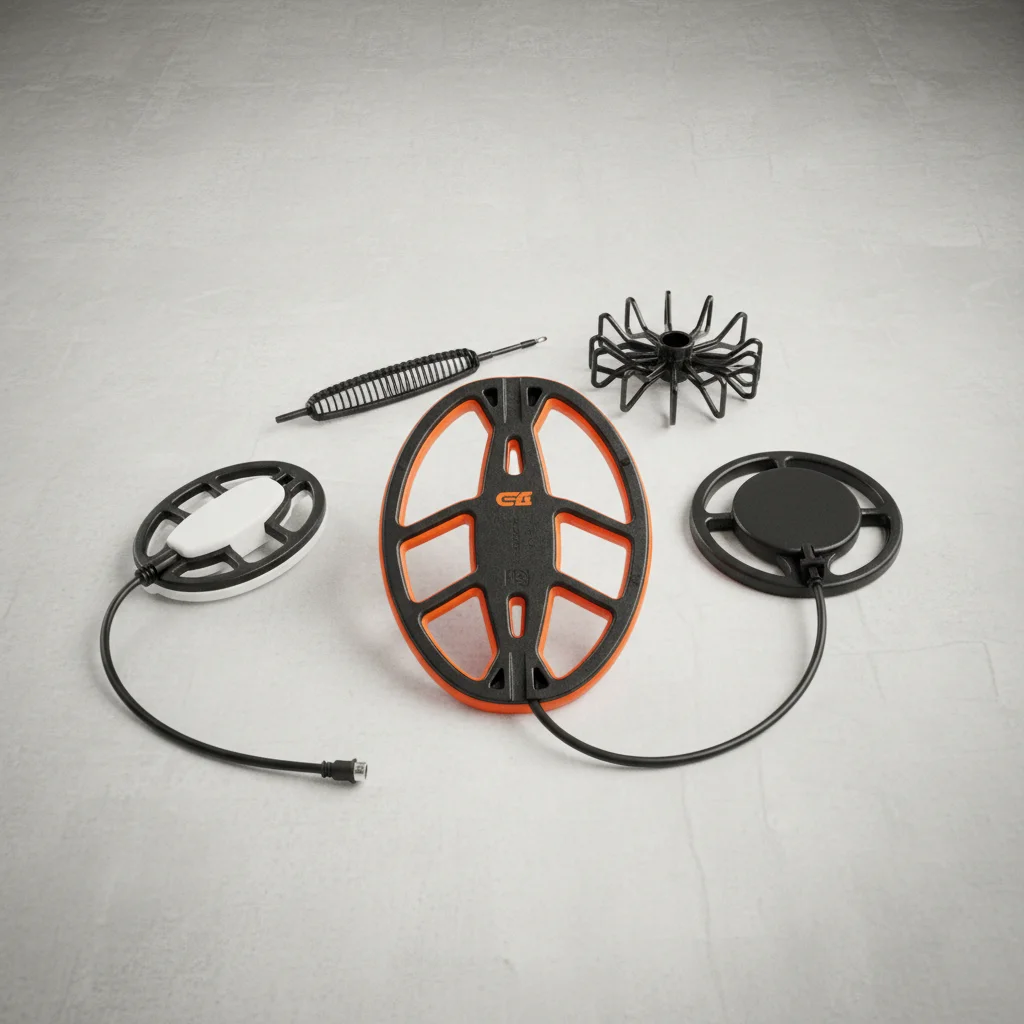
Choosing the right metal detecting coil is crucial for successful treasure hunting, and the shape of your coil significantly impacts its performance. There are three primary coil shapes: concentric, Monoloop, and Double-D. Each offers distinct advantages for different terrains and target types, influencing depth, sensitivity, and ground coverage. Understanding these differences will help you optimize your detector for specific finds, from tiny gold nuggets to deeply buried relics.
Understanding Concentric Coils for General Purpose Hunting
Concentric coils are characterized by two overlapping wire windings, one for transmitting and one for receiving, arranged in a circular pattern. This design creates a cone-shaped electromagnetic field, which is excellent for pinpointing targets accurately. They offer good depth and sensitivity to a wide range of targets, making them a popular choice for general-purpose metal detecting. However, their performance can be hindered in highly mineralized ground, as the broad field can pick up more ground noise, leading to false signals. They are ideal for areas with low mineralization, such as parks, beaches, and cultivated fields, where precise target identification is key. For expert metal detecting reviews on this site.
Double-D Coils: Performance in Challenging Conditions
Double-D coils feature two ‘D’ shaped windings that overlap in the middle, creating a blade-like electromagnetic field. This unique design makes them highly effective in heavily mineralized ground and areas with electromagnetic interference. The Double-D field is narrower and more focused than a concentric coil’s, allowing it to penetrate mineralized soil with less interference and provide more stable signals. They also offer excellent ground coverage, making them efficient for searching large areas. While they may not pinpoint as precisely as concentric coils, their ability to handle tough conditions makes them a favorite for relic hunters and prospectors.
Monoloop Coils: The Gold Prospector’s Choice
|
Our Picks for the Best Metal Detector in 2026
As an Amazon Associate I earn from qualifying purchases.
|
||
| Num | Product | Action |
|---|---|---|
| 1 | PANCKY Metal Detectors for Adults Waterproof, Professional Higher Accuracy Gold Detector with LCD Display, 5 Mode, Advanced DSP Chip 10" Coil, PK0075 |

|
| 2 | GoGonova Metal Detector for Adults & Kids, Kids Metal Detector, Waterproof Metal Detectors with High Accuracy Lightweight 8" Search Coil, All Metal & Disc Modes for Junior & Youth Gold Detector |
|
| 3 | DR.ÖTEK Metal Detector for Adults, Professional Metal Detectors Waterproof with 10" IP68 Coil, Larger LCD Display, High Accuracy for Gold & Silver Detection & Beach Treasure Hunting, Beginner Friendly |
|
| 4 | Bounty Hunter TK4 Tracker IV Metal Detector – All-Terrain Gold, Silver, Coin & Relic Finder with 8" Waterproof Coil, 3 Detection Modes – for Adults & Kids – Made in USA |
|
| 5 | SUNPOW Metal Detector for Adults Professional - High Accuracy with 12" Waterproof Coil, 2x Backlit LCD Display, Advanced DSP Chip, 5 Modes, Adjustable Length (19"-59"), Sturdy Spiral Structure -OTMD14 |
|
| 6 | Professional Metal Detector for Adults,12" IP68 Waterproof Search Coil with LCD Backlight,5 Modes Gold Detector,Advanced DSP Chip&High Accuracy System for Beach/Gold Hunting |
|
| 7 | Metal Detector for Adults Professional, Waterproof Pinpoint, High Accuracy Gold and Silver Detection, Underwater and Beach Use, 10'' IP68 Coil, Bigger LCD, New Advanced DSP Chip, Black |
|
| 8 | SUNPOW Metal Detector for Adults & Kids, Kids Metal Detector kit Waterproof for Gold Detecting, Stable Anti-Interference, Higher Accuracy, Bigger LCD Display, 4 Modes, 8" Search Coil, MD13 |
|
| 9 | PANCKY Metal Detectors for Adults Waterproof, Professional Higher Accuracy Gold Detector with LCD Display, 5 Mode, Advanced DSP Chip 10" Coil, PK0075 |
|
| 10 | 2026 Latest Metal Detector for Adults, Professional Waterproof & Adjustable Stem, Higher Accuracy Gold Detector with LCD, Advanced DSP Chip, 2.26 Pounds Lightweight Suitable for Beach and Backyard |
|
Monoloop coils, primarily used with pulse induction (PI) metal detectors, consist of a single winding that acts as both transmitter and receiver. This design creates a wide, cone-shaped electromagnetic field that is incredibly sensitive to small gold nuggets and offers exceptional depth in highly mineralized ground. Monoloop coils are less affected by ground mineralization compared to VLF (Very Low Frequency) concentric coils, making them the go-to choice for serious gold prospectors. However, they do not offer target discrimination, meaning they will detect all metals, including iron, which can be a drawback in trashy areas. They are best suited for remote goldfields where trash is minimal.
Choosing the Right Coil for Your Specific Needs
The best coil for you depends on what you’re hunting for and where you’re hunting. For general coin and jewelry hunting in parks, a concentric coil offers excellent pinpointing. If you’re tackling mineralized ground or searching for relics in challenging environments, a Double-D coil will provide superior stability and coverage. For dedicated gold prospecting in highly mineralized areas, a Monoloop coil on a PI detector is often the most effective. Many detectorists own multiple coils to adapt to different situations.
- Consider a small, high-frequency concentric coil for tiny gold targets in low mineralization.
- Opt for a large Double-D coil for maximum ground coverage and depth in relic hunting.
- Use a medium-sized concentric coil for balanced performance in parks and beaches.
- For highly trashy areas, a small Double-D coil can help with target separation.
- When prospecting for gold, a Monoloop coil is often indispensable.
Maintenance and Care for Your Metal Detecting Coils
Proper care of your metal detecting coils will ensure their longevity and consistent performance. Always keep your coil clean, wiping off dirt and debris after each use. Avoid dragging the coil directly on rough surfaces, as this can damage the coil housing and wiring. If your coil is submersible, ensure the connections are clean and dry before and after use in water. Regularly inspect the cable for any nicks or cuts, as these can lead to signal interference. Storing your coils in a protective bag or case when not in use will prevent accidental damage.
