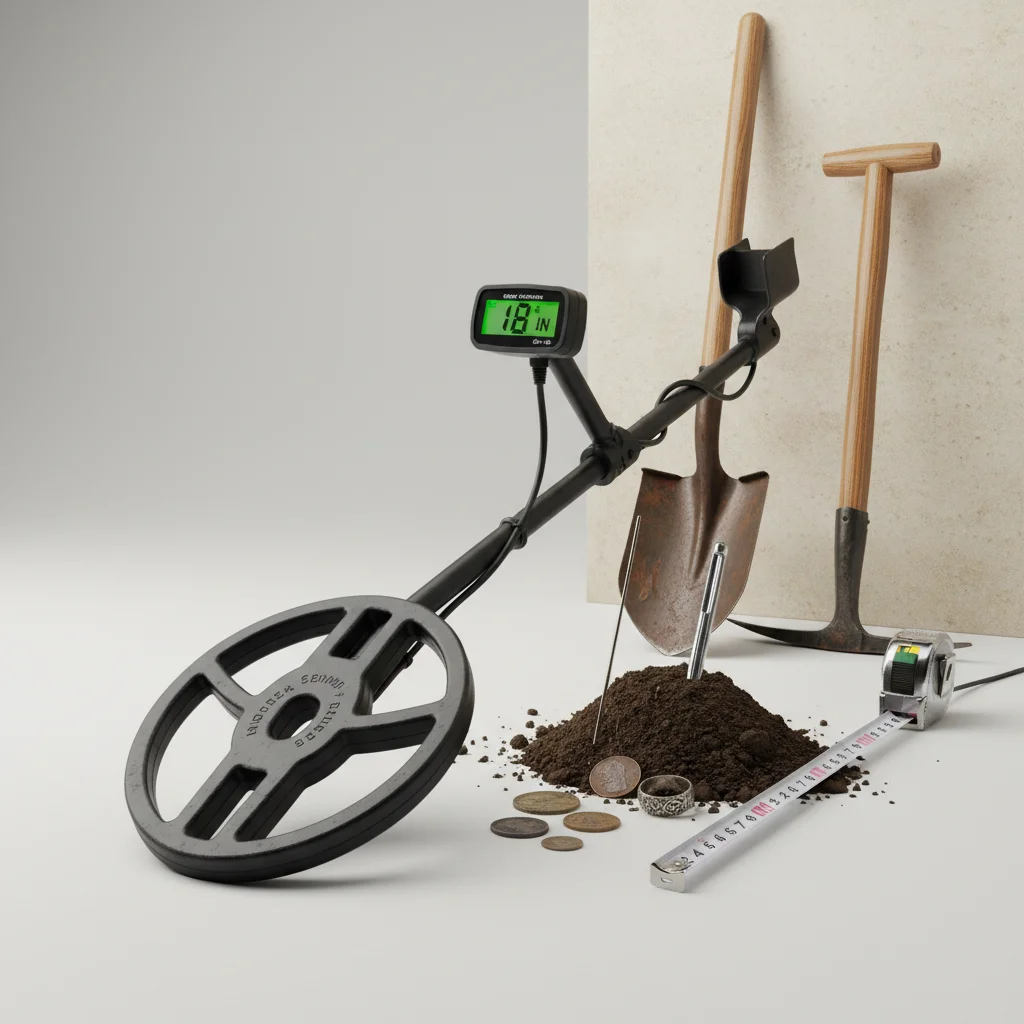
The depth a metal detector can reach is influenced by several factors, but generally, hobbyist detectors can find targets between 4 to 12 inches deep. Specialized deep-seeking detectors, however, can extend this range significantly, sometimes reaching several feet. Understanding these variables is crucial for maximizing your treasure hunting success.
Factors Affecting Metal Detecting Depth
Several key elements determine how deep your metal detector can penetrate the ground. The size and type of the target object are paramount; larger, more conductive metals like a brass buckle will be detected at greater depths than a tiny gold earring. Soil mineralization also plays a critical role. Highly mineralized soil, common in volcanic regions or saltwater beaches, can significantly reduce detection depth by creating false signals and masking legitimate targets. Conversely, low-mineralization soil allows for deeper penetration. For more metal detecting guides on this site.
The type of metal detector itself is another major factor. Very Low Frequency (VLF) detectors are excellent for general-purpose hunting and good depth in mild soils, while Pulse Induction (PI) detectors excel in highly mineralized environments, offering superior depth for larger targets. The coil size also matters; larger coils generally provide greater depth but are less sensitive to small objects and cover a wider area, making pinpointing harder. Smaller coils offer better sensitivity to tiny targets and improved target separation in trashy areas, but at reduced depth.
Optimizing Your Detector for Maximum Depth
To achieve the best possible depth with your metal detector, proper settings are essential. Start by adjusting the sensitivity to the highest stable level without excessive false signals. Ground balancing is crucial, especially in mineralized soils; performing a precise ground balance will eliminate interference and allow the detector to ‘see’ deeper. Many modern detectors offer automatic ground balance, but manual adjustments can sometimes yield better results in challenging conditions.
Using the right search coil for your specific hunting conditions can also make a difference. For general deep hunting, a larger concentric or DD (Double-D) coil is often preferred. Sweeping your coil slowly and deliberately ensures the detector has enough time to process signals from deeper targets. Avoid rushing, as this can cause you to miss faint, deep signals.
Deep Seeking Metal Detectors for Serious Hunters
|
Our Picks for the Best Metal Detector in 2026
As an Amazon Associate I earn from qualifying purchases.
|
||
| Num | Product | Action |
|---|---|---|
| 1 | Metal Detector for Adults Professional, Waterproof Pinpoint, High Accuracy Gold and Silver Detection, Underwater and Beach Use, 10'' IP68 Coil, Bigger LCD, New Advanced DSP Chip, Black |

|
| 2 | Bounty Hunter TK4 Tracker IV Metal Detector – All-Terrain Gold, Silver, Coin & Relic Finder with 8" Waterproof Coil, 3 Detection Modes – for Adults & Kids – Made in USA |
|
| 3 | SUNPOW Metal Detector for Adults Professional - High Accuracy with 12" Waterproof Coil, 2x Backlit LCD Display, Advanced DSP Chip, 5 Modes, Adjustable Length (19"-59"), Sturdy Spiral Structure -OTMD14 |
|
| 4 | 2026 Latest Metal Detector for Adults, Professional Waterproof & Adjustable Stem, Higher Accuracy Gold Detector with LCD, Advanced DSP Chip, 2.26 Pounds Lightweight Suitable for Beach and Backyard |
|
| 5 | PANCKY Metal Detectors for Adults Waterproof, Professional Higher Accuracy Gold Detector with LCD Display, 5 Mode, Advanced DSP Chip 10" Coil, PK0075 |
|
| 6 | PANCKY Metal Detectors for Adults Waterproof, Professional Higher Accuracy Gold Detector with LCD Display, 5 Mode, Advanced DSP Chip 10" Coil, PK0075 |
|
| 7 | DR.ÖTEK Metal Detector for Adults, Professional Metal Detectors Waterproof with 10" IP68 Coil, Larger LCD Display, High Accuracy for Gold & Silver Detection & Beach Treasure Hunting, Beginner Friendly |
|
| 8 | SUNPOW Metal Detector for Adults & Kids, Kids Metal Detector kit Waterproof for Gold Detecting, Stable Anti-Interference, Higher Accuracy, Bigger LCD Display, 4 Modes, 8" Search Coil, MD13 |
|
| 9 | GoGonova Metal Detector for Adults & Kids, Kids Metal Detector, Waterproof Metal Detectors with High Accuracy Lightweight 8" Search Coil, All Metal & Disc Modes for Junior & Youth Gold Detector |
|
| 10 | Professional Metal Detector for Adults,12" IP68 Waterproof Search Coil with LCD Backlight,5 Modes Gold Detector,Advanced DSP Chip&High Accuracy System for Beach/Gold Hunting |
|
For those serious about finding deeply buried relics and caches, specialized deep-seeking metal detectors are the answer. These machines often employ Pulse Induction (PI) technology, which is less affected by ground mineralization compared to VLF detectors. PI detectors work by sending short bursts of current into the ground and then listening for the decay of eddy currents produced by metal objects. This allows them to penetrate much deeper, often several feet, making them ideal for searching old homesteads, battlefields, and large property areas.
Some advanced VLF detectors also offer enhanced depth capabilities through multi-frequency technology, which processes signals at multiple frequencies simultaneously to provide better target identification and depth in varying ground conditions. When considering a deep-seeking detector, research models known for their robust construction and advanced signal processing capabilities.
Common Misconceptions About Depth
Many beginners often overestimate the depth capabilities of their metal detectors. It’s important to understand that the advertised maximum depth is usually under ideal conditions with a large, highly conductive target. In real-world scenarios, especially with small targets or challenging soil, actual detection depth will be less. Another misconception is that simply increasing sensitivity will always lead to greater depth. While sensitivity is important, too much can lead to instability and false signals, ultimately hindering your ability to hear faint deep targets.
- Larger targets are detected deeper than smaller targets.
- Highly mineralized soil reduces detection depth.
- Pulse Induction (PI) detectors generally offer superior depth in challenging soils.
- Proper ground balance is critical for maximizing depth.
- Coil size impacts depth and target sensitivity.
Practical Tips for Deeper Finds
Beyond your detector’s settings, your technique and preparation can significantly impact your chances of finding deeper treasures. Researching historical maps and local lore can pinpoint areas where valuable items might have been lost long ago. These locations often hold older, deeper targets. Always dig all repeatable signals, even faint ones, as they could indicate a deep, valuable find. Many experienced detectorists have found significant relics by digging what seemed like a weak signal.
Consider investing in a good quality digging tool that can handle deeper excavations. A sturdy shovel or spade is essential for efficiently recovering targets without damaging them or the surrounding area. Remember that patience is a virtue in metal detecting, especially when hunting for deep targets. It often requires more time and effort to locate and recover these elusive finds.
For those looking to upgrade their equipment to achieve greater depth, consider models like thewhich is renowned for its deep-seeking capabilities in various terrains. Alternatively, theoffers excellent performance for both beginners and experienced users aiming for deeper targets.
