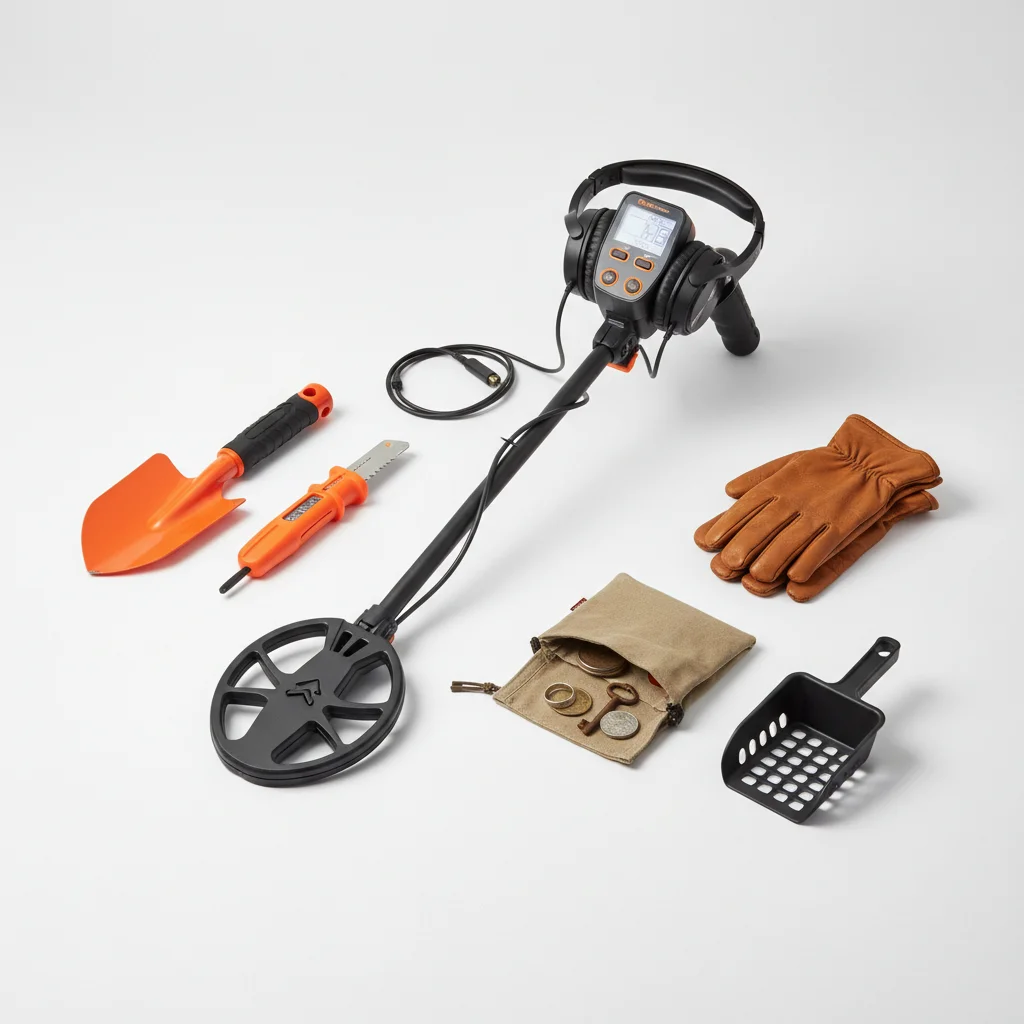
For beginners venturing into metal detecting, three essential pieces of gear are absolutely necessary to start your treasure hunting journey effectively. Beyond the metal detector itself, a reliable pinpointer, a sturdy digging tool, and a comfortable finds pouch will significantly enhance your experience and success rate. These items streamline the recovery process, minimize ground disturbance, and keep your finds secure.
The Indispensable Pinpointer: Precision in Recovery
A pinpointer is a small, handheld device that helps locate targets precisely once your main metal detector has identified a general area. Without a pinpointer, you’d spend considerably more time digging larger holes and sifting through dirt, increasing the risk of damaging your find or leaving it behind. It works by emitting an audible or vibratory signal that intensifies as you get closer to the metallic object, allowing for quick and accurate retrieval. This precision saves time and effort, making it a crucial tool for any beginner. For complete metal detecting library on this site.
Choosing the Right Digging Tool for Your Terrain
The type of digging tool you need depends largely on the terrain you plan to explore. For soft soil, beaches, or grassy areas, a sand scoop or a small trowel might suffice. However, for harder ground, a more robust digging shovel or a specialized digging tool with a serrated edge is recommended. Always choose a tool that is durable, comfortable to handle, and appropriate for minimizing environmental impact. Remember to always fill in your holes to leave the area as you found it.
- Sand Scoop: Ideal for beach hunting and loose soil.
- Hand Trowel: Good for small, shallow targets in soft ground.
- Relic Shovel: Designed for tougher soil and deeper targets.
- Serrated Edge Digger: Excellent for cutting through roots and compacted earth.
- Probe: Useful for pinpointing without extensive digging.
The Practical Finds Pouch: Keeping Your Treasures Safe
|
Our Picks for the Best Metal Detector in 2026
As an Amazon Associate I earn from qualifying purchases.
|
||
| Num | Product | Action |
|---|---|---|
| 1 | SUNPOW Metal Detector for Adults Professional - High Accuracy with 12" Waterproof Coil, 2x Backlit LCD Display, Advanced DSP Chip, 5 Modes, Adjustable Length (19"-59"), Sturdy Spiral Structure -OTMD14 |

|
| 2 | Professional Metal Detector for Adults,12" IP68 Waterproof Search Coil with LCD Backlight,5 Modes Gold Detector,Advanced DSP Chip&High Accuracy System for Beach/Gold Hunting |
|
| 3 | PANCKY Metal Detectors for Adults Waterproof, Professional Higher Accuracy Gold Detector with LCD Display, 5 Mode, Advanced DSP Chip 10" Coil, PK0075 |
|
| 4 | Metal Detector for Adults Professional, Waterproof Pinpoint, High Accuracy Gold and Silver Detection, Underwater and Beach Use, 10'' IP68 Coil, Bigger LCD, New Advanced DSP Chip, Black |
|
| 5 | PANCKY Metal Detectors for Adults Waterproof, Professional Higher Accuracy Gold Detector with LCD Display, 5 Mode, Advanced DSP Chip 10" Coil, PK0075 |
|
| 6 | GoGonova Metal Detector for Adults & Kids, Kids Metal Detector, Waterproof Metal Detectors with High Accuracy Lightweight 8" Search Coil, All Metal & Disc Modes for Junior & Youth Gold Detector |
|
| 7 | DR.ÖTEK Metal Detector for Adults, Professional Metal Detectors Waterproof with 10" IP68 Coil, Larger LCD Display, High Accuracy for Gold & Silver Detection & Beach Treasure Hunting, Beginner Friendly |
|
| 8 | Bounty Hunter TK4 Tracker IV Metal Detector – All-Terrain Gold, Silver, Coin & Relic Finder with 8" Waterproof Coil, 3 Detection Modes – for Adults & Kids – Made in USA |
|
| 9 | SUNPOW Metal Detector for Adults & Kids, Kids Metal Detector kit Waterproof for Gold Detecting, Stable Anti-Interference, Higher Accuracy, Bigger LCD Display, 4 Modes, 8" Search Coil, MD13 |
|
| 10 | 2026 Latest Metal Detector for Adults, Professional Waterproof & Adjustable Stem, Higher Accuracy Gold Detector with LCD, Advanced DSP Chip, 2.26 Pounds Lightweight Suitable for Beach and Backyard |
|
A finds pouch is more than just a bag; it’s a critical accessory for organizing and protecting your recovered items. A good pouch will have multiple compartments, allowing you to separate trash from valuable finds, and often features a durable, water-resistant material. Attaching it to your belt keeps your hands free and ensures your discoveries are secure and easily accessible throughout your hunt. Don’t underestimate the importance of a well-designed pouch for a smooth and enjoyable detecting session.
Understanding Metal Detector Basics for Newcomers
Before you even consider accessories, understanding the basic functions of your metal detector is paramount. Familiarize yourself with settings like sensitivity, discrimination, and ground balance. Sensitivity controls how deep your detector can ‘see’ and its responsiveness to small targets. Discrimination allows you to filter out unwanted metals, like iron, so you can focus on more desirable targets. Ground balance helps the detector ignore mineralization in the soil, which can cause false signals. Many beginner-friendly detectors come with preset modes, making it easier to get started.
Beyond the Essentials: Next Steps for Aspiring Detectorists
Once you’ve mastered the basics and are comfortable with your essential gear, you might consider additional accessories to further enhance your hobby. Items like headphones can improve your ability to hear faint signals, especially in noisy environments. A coil cover can protect your search coil from scratches and damage. A GPS device or a smartphone app can help you mark your finds and track your hunting locations. Remember, the journey of metal detecting is one of continuous learning and adaptation.
