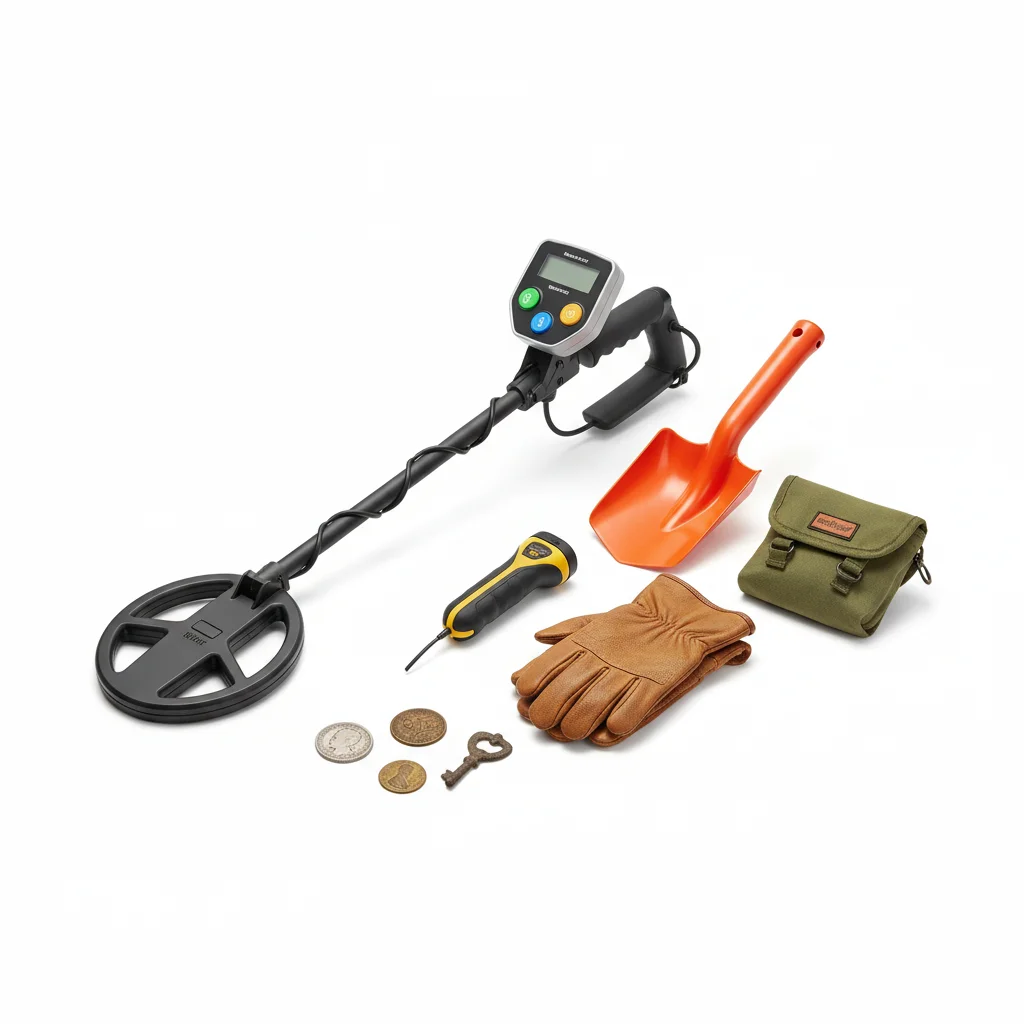
Starting your journey into metal detecting can be an exciting adventure, and with the right approach, you can quickly find your first buried treasures. For beginners, understanding the fundamental techniques and equipment is crucial to avoid common pitfalls and maximize your success. This guide will walk you through the essential steps, from choosing your first detector to understanding where and how to search effectively.
Choosing Your First Metal Detector
Selecting the right metal detector as a beginner doesn’t have to be overwhelming. Focus on entry-level models that offer a good balance of features and ease of use. Look for detectors with preset modes, adjustable sensitivity, and a clear display. Brands like Garrett, Minelab, and Bounty Hunter offer excellent starter options that are reliable and user-friendly. Consider your budget, but remember that a slightly higher investment in a quality beginner model can save you frustration in the long run.
Many entry-level detectors come with a standard concentric or DD coil, which are versatile for various terrains. As you gain experience, you can explore specialized coils, but for now, stick with what’s included. Prioritize comfort and weight, as you’ll be swinging your detector for extended periods. A lightweight, ergonomic design will make your hunts more enjoyable.
Understanding Basic Settings and Operation
Once you have your detector, familiarize yourself with its basic settings. Most beginner detectors will have controls for sensitivity, discrimination, and volume. Sensitivity controls how deep your detector can ‘see’ into the ground; start with a moderate setting to avoid false signals. Discrimination allows you to filter out unwanted targets like iron nails or pull tabs, focusing on more valuable metals. Begin with a low discrimination setting to ensure you don’t miss any good targets, then gradually increase it as you learn to identify different signals.
Practice in your backyard or a local park to get a feel for how your detector responds to different objects. Bury a few coins, a ring, and some trash items at varying depths. This hands-on experience will help you understand the audio tones and visual cues your detector provides, making you more confident when you’re out in the field.
Where to Begin Your Treasure Hunt
|
Our Picks for the Best Metal Detector in 2026
As an Amazon Associate I earn from qualifying purchases.
|
||
| Num | Product | Action |
|---|---|---|
| 1 | Metal Detector for Adults Professional, Waterproof Pinpoint, High Accuracy Gold and Silver Detection, Underwater and Beach Use, 10'' IP68 Coil, Bigger LCD, New Advanced DSP Chip, Black |

|
| 2 | DR.ÖTEK Metal Detector for Adults, Professional Metal Detectors Waterproof with 10" IP68 Coil, Larger LCD Display, High Accuracy for Gold & Silver Detection & Beach Treasure Hunting, Beginner Friendly |
|
| 3 | 2026 Latest Metal Detector for Adults, Professional Waterproof & Adjustable Stem, Higher Accuracy Gold Detector with LCD, Advanced DSP Chip, 2.26 Pounds Lightweight Suitable for Beach and Backyard |
|
| 4 | Professional Metal Detector for Adults,12" IP68 Waterproof Search Coil with LCD Backlight,5 Modes Gold Detector,Advanced DSP Chip&High Accuracy System for Beach/Gold Hunting |
|
| 5 | Bounty Hunter TK4 Tracker IV Metal Detector – All-Terrain Gold, Silver, Coin & Relic Finder with 8" Waterproof Coil, 3 Detection Modes – for Adults & Kids – Made in USA |
|
| 6 | PANCKY Metal Detectors for Adults Waterproof, Professional Higher Accuracy Gold Detector with LCD Display, 5 Mode, Advanced DSP Chip 10" Coil, PK0075 |
|
| 7 | SUNPOW Metal Detector for Adults & Kids, Kids Metal Detector kit Waterproof for Gold Detecting, Stable Anti-Interference, Higher Accuracy, Bigger LCD Display, 4 Modes, 8" Search Coil, MD13 |
|
| 8 | SUNPOW Metal Detector for Adults Professional - High Accuracy with 12" Waterproof Coil, 2x Backlit LCD Display, Advanced DSP Chip, 5 Modes, Adjustable Length (19"-59"), Sturdy Spiral Structure -OTMD14 |
|
| 9 | GoGonova Metal Detector for Adults & Kids, Kids Metal Detector, Waterproof Metal Detectors with High Accuracy Lightweight 8" Search Coil, All Metal & Disc Modes for Junior & Youth Gold Detector |
|
| 10 | PANCKY Metal Detectors for Adults Waterproof, Professional Higher Accuracy Gold Detector with LCD Display, 5 Mode, Advanced DSP Chip 10" Coil, PK0075 |
|
The location of your hunt significantly impacts your success. For beginners, public parks, old schoolyards, and beaches are excellent starting points. These areas often have a history of human activity, meaning a higher chance of finding lost coins, jewelry, and relics. Always check local regulations and obtain any necessary permits before you start digging. Respect private property and always ask for permission from landowners.
- Public Parks: High foot traffic areas, often yielding modern coins and jewelry.
- Old Schoolyards: Potential for older coins, buttons, and small toys.
- Beach Dry Sand: Excellent for recent losses like rings and watches.
- Old Picnic Areas: Good for finding dropped items from past gatherings.
- Abandoned Homesites: Can hold historical artifacts, but require careful research and permission.
Essential Tools and Accessories
Beyond your metal detector, a few essential accessories will make your hunts more efficient and enjoyable. A good digging tool, such as a trowel or a sand scoop for beach hunting, is indispensable. Pinpointers are small, handheld devices that help you pinpoint the exact location of a target in the hole, saving you time and minimizing damage to the ground. Headphones are also highly recommended, as they allow you to hear faint signals more clearly and block out ambient noise.
Don’t forget a finds pouch to store your treasures and a trash bag for any junk you dig up. Always practice responsible detecting by filling in your holes and taking all trash with you. This ensures that detecting spots remain accessible and enjoyable for everyone.
Interpreting Signals and Digging Techniques
Learning to interpret the signals your metal detector gives is a skill that develops with practice. Most detectors provide both audio tones and a visual display (VDI numbers) to indicate the type of metal and its conductivity. High-pitched, consistent tones often signify valuable targets, while low, broken tones usually indicate iron or trash. Pay attention to the consistency of the signal; a solid, repeatable signal is generally more promising than a sporadic one.
When you get a good signal, use your digging tool to carefully excavate a plug of earth. If you’re in a grassy area, cut a neat, three-sided plug that can be easily replaced. Use your pinpointer to locate the target within the plug or the hole. Once you’ve recovered your find, always fill in your hole completely, leaving no trace of your activity. This preserves the land and maintains a positive image for the metal detecting community.Remember, patience is key; not every signal will be a treasure, but every hunt is an opportunity to learn and explore.
