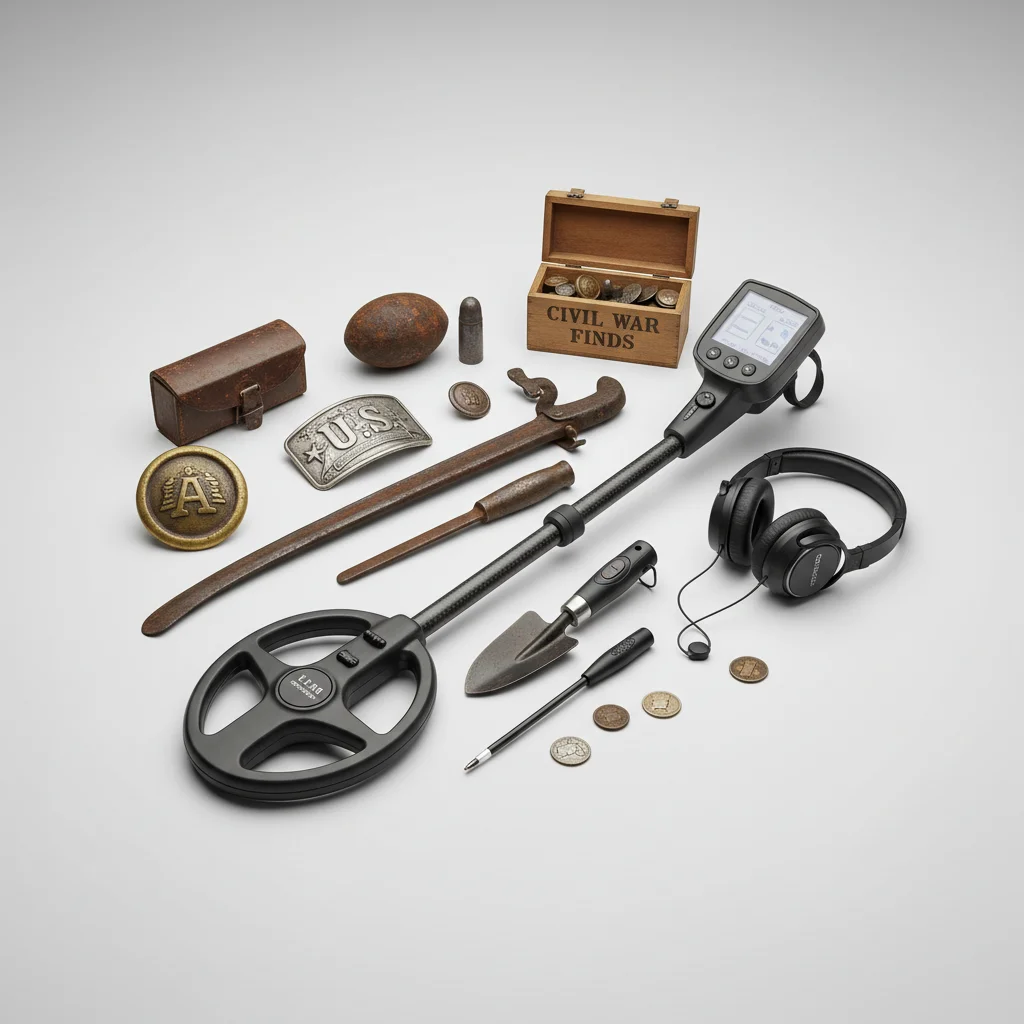
Metal detecting for Civil War relics can be an incredibly rewarding hobby, offering a tangible connection to American history. Enthusiasts can expect to unearth a variety of artifacts, ranging from common camp items to rare military insignia. The most frequently discovered items include bullets, buttons, and buckles, providing a direct link to the soldiers who once occupied these historic sites.
Identifying Promising Civil War Battlefields and Campsites
To maximize your chances of finding Civil War relics, focus your search on documented battlefields, encampments, and supply routes. Research historical maps and regimental histories to pinpoint specific areas of activity. Look for subtle topographical features that might indicate former tent sites, picket lines, or artillery positions. Always ensure you have proper permission before detecting on any land, especially historical sites, and be aware of local regulations regarding artifact recovery.
Consider areas near water sources, old roads, and elevated positions, as these were often strategic points for both Union and Confederate forces. Many smaller skirmish sites and forgotten camp areas still hold a wealth of undiscovered history. Consulting local historical societies can also provide invaluable insights into lesser-known Civil War locations in your region.
Essential Metal Detector Settings for Civil War Relics
When searching for Civil War relics, specific metal detector settings can significantly improve your success. Most relics are made of iron, brass, or lead, so a detector with good discrimination capabilities is crucial. Set your discrimination to reject modern trash like aluminum foil and pull tabs, but ensure it’s low enough to pick up iron and lead signals. A lower frequency detector (around 5-10 kHz) is often effective for deeper, older targets, while higher frequencies can be good for smaller, shallower items like musket balls.
Ground balance your detector frequently, especially in areas with varying soil mineralization, to prevent false signals and improve target identification. Experiment with different recovery speeds; a slower recovery speed can help in identifying multiple targets in close proximity, which is common on old battlefields. For deeper targets, consider using a larger search coil, which can penetrate further into the ground.
Common Civil War Artifacts You Might Find
|
Our Picks for the Best Metal Detector in 2026
As an Amazon Associate I earn from qualifying purchases.
|
||
| Num | Product | Action |
|---|---|---|
| 1 | GoGonova Metal Detector for Adults & Kids, Kids Metal Detector, Waterproof Metal Detectors with High Accuracy Lightweight 8" Search Coil, All Metal & Disc Modes for Junior & Youth Gold Detector |

|
| 2 | Professional Metal Detector for Adults,12" IP68 Waterproof Search Coil with LCD Backlight,5 Modes Gold Detector,Advanced DSP Chip&High Accuracy System for Beach/Gold Hunting |
|
| 3 | PANCKY Metal Detectors for Adults Waterproof, Professional Higher Accuracy Gold Detector with LCD Display, 5 Mode, Advanced DSP Chip 10" Coil, PK0075 |
|
| 4 | PANCKY Metal Detectors for Adults Waterproof, Professional Higher Accuracy Gold Detector with LCD Display, 5 Mode, Advanced DSP Chip 10" Coil, PK0075 |
|
| 5 | SUNPOW Metal Detector for Adults Professional - High Accuracy with 12" Waterproof Coil, 2x Backlit LCD Display, Advanced DSP Chip, 5 Modes, Adjustable Length (19"-59"), Sturdy Spiral Structure -OTMD14 |
|
| 6 | DR.ÖTEK Metal Detector for Adults, Professional Metal Detectors Waterproof with 10" IP68 Coil, Larger LCD Display, High Accuracy for Gold & Silver Detection & Beach Treasure Hunting, Beginner Friendly |
|
| 7 | Bounty Hunter TK4 Tracker IV Metal Detector – All-Terrain Gold, Silver, Coin & Relic Finder with 8" Waterproof Coil, 3 Detection Modes – for Adults & Kids – Made in USA |
|
| 8 | SUNPOW Metal Detector for Adults & Kids, Kids Metal Detector kit Waterproof for Gold Detecting, Stable Anti-Interference, Higher Accuracy, Bigger LCD Display, 4 Modes, 8" Search Coil, MD13 |
|
| 9 | Metal Detector for Adults Professional, Waterproof Pinpoint, High Accuracy Gold and Silver Detection, Underwater and Beach Use, 10'' IP68 Coil, Bigger LCD, New Advanced DSP Chip, Black |
|
| 10 | 2026 Latest Metal Detector for Adults, Professional Waterproof & Adjustable Stem, Higher Accuracy Gold Detector with LCD, Advanced DSP Chip, 2.26 Pounds Lightweight Suitable for Beach and Backyard |
|
The range of Civil War artifacts is vast, but some items are more commonly found than others. Here are some of the most frequent discoveries:
- Bullets and Musket Balls: These are by far the most common finds, often indicating skirmish lines or firing positions.
- Buttons: Military uniform buttons (Union and Confederate) are highly sought after, as are civilian buttons from camp followers.
- Buckles: Belt buckles, cartridge box buckles, and suspender buckles are frequent finds.
- Coins: Period coins, often dropped by soldiers, can offer a glimpse into their daily lives.
- Camp Equipment: Items like eating utensils, tent grommets, and personal effects such as thimbles or pipe fragments.
Each find tells a story, and careful research after recovery can often link an artifact to specific units or events.
Preserving Your Civil War Finds
Proper preservation of Civil War relics is paramount to maintaining their historical integrity. Once unearthed, clean artifacts gently. For metal objects, avoid harsh chemicals or abrasive tools that could damage patinas or delicate features. Many relics, especially iron, will require stabilization to prevent further deterioration. Consider consulting with a professional conservator for valuable or fragile items.
Document each find meticulously, noting the exact location, depth, and any associated artifacts. This information contributes to the historical record and helps researchers understand the context of your discoveries. Store your relics in a stable environment, away from extreme temperature fluctuations and humidity, to ensure their long-term preservation.
Recommended Metal Detectors for Civil War Relic Hunting
For serious Civil War relic hunting, a robust and sensitive metal detector is essential. Models known for their excellent depth and discrimination on iron and non-ferrous targets are highly recommended. Theis a popular choice among relic hunters due to its multi-frequency capabilities and ability to perform well in various ground conditions. Its iron audio feature can be particularly useful for distinguishing between desirable iron relics and modern junk.
Another excellent option is the, which offers advanced ground balancing and target separation, making it ideal for trashy sites often found near old encampments. Both detectors provide the necessary sensitivity to pick up small, deep targets like musket balls and buttons, while also offering the durability required for rugged outdoor use. Investing in a quality machine will significantly enhance your relic hunting experience and increase your chances of making historically significant finds.
