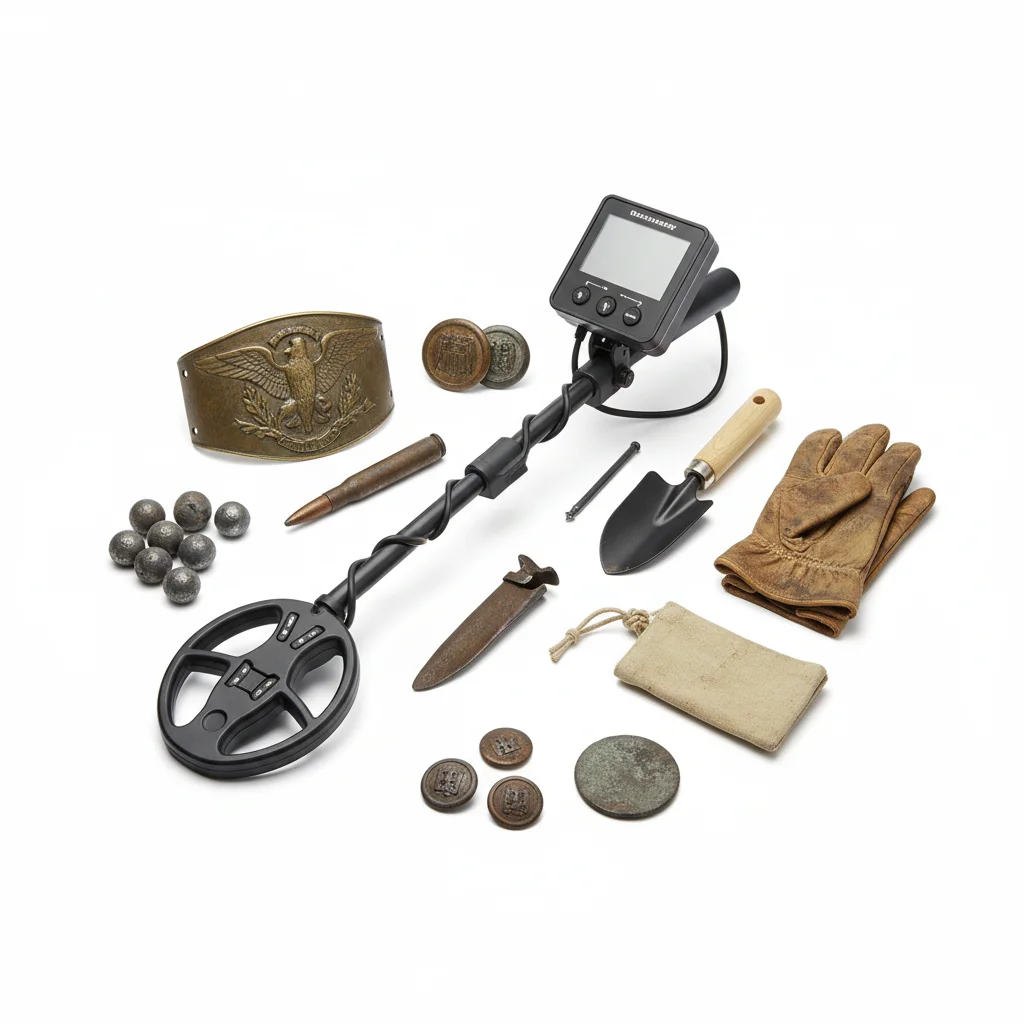
When metal detecting for Civil War relics, the optimal settings on your detector will largely depend on the specific model you are using, the ground conditions, and the type of relics you are hoping to find. Generally, a good starting point involves using a lower frequency for deeper penetration, a moderate discrimination setting to filter out common iron trash, and a sensitivity level that balances depth with stability. For instance, many experienced relic hunters find success with a frequency around 5-10 kHz, a discrimination setting just above iron, and a sensitivity that allows for stable operation without excessive false signals.
Understanding Your Detector’s Frequency for Relic Hunting
The operating frequency of your metal detector plays a crucial role in relic hunting. Lower frequencies (e.g., 3-8 kHz) are generally better for detecting larger, deeper targets and highly mineralized ground, which is common in many Civil War battlefields and encampments. Higher frequencies (e.g., 15-20 kHz and above) are more sensitive to smaller targets, such as musket balls, buttons, and thin coins, but may struggle with depth in highly mineralized soil. Many modern detectors offer multi-frequency capabilities or adjustable frequencies, allowing you to tailor your search to specific conditions and target types. Experimenting with different frequencies in a known relic-rich area can help you determine the most effective setting for your particular hunt.
Optimizing Discrimination and Notch Settings
Discrimination is essential for filtering out unwanted junk targets while searching for Civil War relics. While it’s tempting to set discrimination high to avoid digging every piece of iron, too much discrimination can cause you to miss valuable iron relics, such as cannonball fragments, bayonets, or even some types of buckles. A common strategy is to set discrimination just high enough to reject small iron nails and modern trash, but low enough to still pick up larger iron objects. Many detectors also feature a ‘notch’ setting, allowing you to specifically exclude certain target IDs. For Civil War relic hunting, it’s often recommended to keep notch filters minimal or off, as valuable relics can sometimes fall within the same conductivity range as modern trash.
Adjusting Sensitivity for Depth and Stability
|
Our Picks for the Best Metal Detector in 2026
As an Amazon Associate I earn from qualifying purchases.
|
||
| Num | Product | Action |
|---|---|---|
| 1 | 2026 Latest Metal Detector for Adults, Professional Waterproof & Adjustable Stem, Higher Accuracy Gold Detector with LCD, Advanced DSP Chip, 2.26 Pounds Lightweight Suitable for Beach and Backyard |

|
| 2 | SUNPOW Metal Detector for Adults & Kids, Kids Metal Detector kit Waterproof for Gold Detecting, Stable Anti-Interference, Higher Accuracy, Bigger LCD Display, 4 Modes, 8" Search Coil, MD13 |
|
| 3 | PANCKY Metal Detectors for Adults Waterproof, Professional Higher Accuracy Gold Detector with LCD Display, 5 Mode, Advanced DSP Chip 10" Coil, PK0075 |
|
| 4 | PANCKY Metal Detectors for Adults Waterproof, Professional Higher Accuracy Gold Detector with LCD Display, 5 Mode, Advanced DSP Chip 10" Coil, PK0075 |
|
| 5 | Metal Detector for Adults Professional, Waterproof Pinpoint, High Accuracy Gold and Silver Detection, Underwater and Beach Use, 10'' IP68 Coil, Bigger LCD, New Advanced DSP Chip, Black |
|
| 6 | Professional Metal Detector for Adults,12" IP68 Waterproof Search Coil with LCD Backlight,5 Modes Gold Detector,Advanced DSP Chip&High Accuracy System for Beach/Gold Hunting |
|
| 7 | DR.ÖTEK Metal Detector for Adults, Professional Metal Detectors Waterproof with 10" IP68 Coil, Larger LCD Display, High Accuracy for Gold & Silver Detection & Beach Treasure Hunting, Beginner Friendly |
|
| 8 | GoGonova Metal Detector for Adults & Kids, Kids Metal Detector, Waterproof Metal Detectors with High Accuracy Lightweight 8" Search Coil, All Metal & Disc Modes for Junior & Youth Gold Detector |
|
| 9 | Bounty Hunter TK4 Tracker IV Metal Detector – All-Terrain Gold, Silver, Coin & Relic Finder with 8" Waterproof Coil, 3 Detection Modes – for Adults & Kids – Made in USA |
|
| 10 | SUNPOW Metal Detector for Adults Professional - High Accuracy with 12" Waterproof Coil, 2x Backlit LCD Display, Advanced DSP Chip, 5 Modes, Adjustable Length (19"-59"), Sturdy Spiral Structure -OTMD14 |
|
Sensitivity controls how deep your detector can ‘see’ into the ground. While maximizing sensitivity might seem ideal for finding deep relics, excessively high sensitivity can lead to unstable operation, false signals, and increased chatter, especially in mineralized soil. The goal is to find the highest stable sensitivity setting for your specific ground conditions. If your detector is chattering or giving erratic signals, reduce the sensitivity until it operates smoothly. Ground balancing, either manual or automatic, is also critical for stable operation and maximizing depth in mineralized ground. Always perform a proper ground balance before you begin your hunt.
Coil Selection for Civil War Relic Sites
The type of search coil you use significantly impacts your success. For general Civil War relic hunting, a concentric or DD (Double-D) coil between 8 and 12 inches is a versatile choice. DD coils generally offer better performance in highly mineralized ground and provide more consistent target identification across the coil’s sweep. Larger coils (13 inches or more) can provide greater depth for larger targets but may struggle with target separation in trashy areas. Smaller coils (6 inches or less) excel at pinpointing small targets in dense trash but sacrifice depth. Consider carrying a couple of different coil sizes if you anticipate varying conditions on your hunt.
- Use a lower frequency (5-10 kHz) for deeper targets in mineralized soil.
- Set discrimination just above small iron to avoid missing valuable iron relics.
- Adjust sensitivity to the highest stable level for your ground conditions.
- Perform a thorough ground balance before each hunt.
- Consider a versatile 8-12 inch DD coil for most relic sites.
Ground Balancing Techniques for Mineralized Soil
Civil War sites often feature highly mineralized soil due to historical activity and natural composition. Proper ground balancing is paramount for effective relic hunting in these conditions. Most modern detectors offer both automatic and manual ground balance options. Automatic ground balance is convenient and often sufficient for moderately mineralized ground. However, for heavily mineralized areas, a manual ground balance can provide a more precise and stable setting, allowing your detector to achieve maximum depth and target separation. Regularly re-ground balance your detector as ground conditions change throughout your hunt, especially if you move to different areas of a site or if the weather shifts.Mastering your detector’s ground balance is a key skill for any serious relic hunter.
