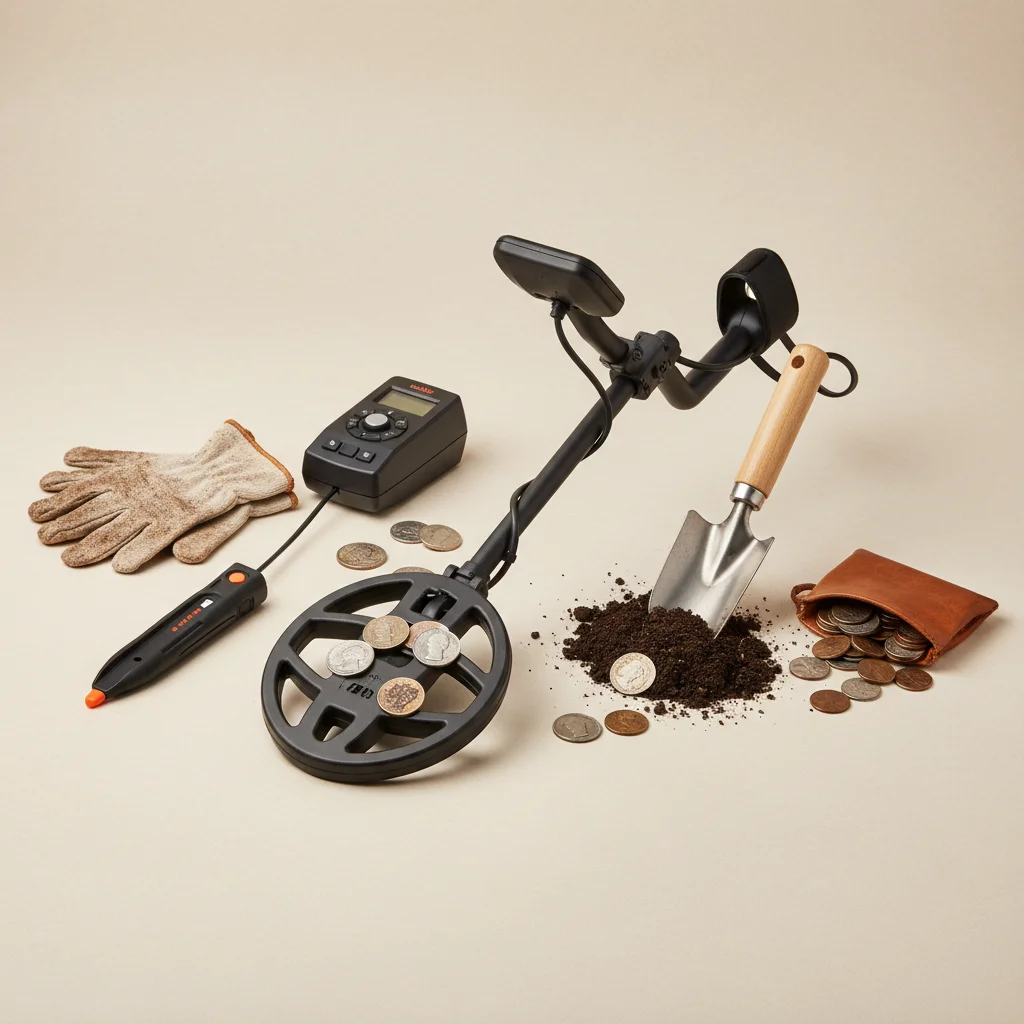
Metal detecting for coins is a rewarding hobby that can uncover valuable currency. To successfully find coins, you need a reliable metal detector, knowledge of common coin locations, and patience. This guide details essential steps and techniques to increase your chances of finding both modern and historical coins, with a focus on specific detector features and search strategies.
Choosing the Right Metal Detector for Coin Hunting
Selecting an appropriate metal detector is crucial for coin hunting. Look for models with good discrimination capabilities, allowing you to filter out junk targets like bottle caps and pull tabs. A higher operating frequency, typically around 10-20 kHz, is generally better for detecting smaller, lower-conductive targets such as coins. Features like target ID numbers and depth indicators can also be very helpful in identifying potential coin finds before you dig.
Consider detectors known for their sensitivity to small targets and their ability to perform well in various ground conditions. Many coin hunters prefer VLF (Very Low Frequency) detectors for their precision and discrimination features.
Where to Find Coins: Prime Locations for Discovery
Coins are often found in areas where people have gathered or passed through frequently. Prime locations include old parks, schoolyards, fairgrounds, and sports fields. Beaches, especially the dry sand areas above the high tide line, are also excellent spots for finding modern and sometimes older coins. Always research the history of an area; former town sites, picnic spots, and even old homesteads can yield significant finds.
When searching, pay close attention to areas around benches, trees, and pathways where coins might have been dropped. Over time, coins can sink into the soil, so a detector with good depth penetration is advantageous.
Essential Techniques for Successful Coin Detecting
|
Our Picks for the Best Metal Detector in 2026
As an Amazon Associate I earn from qualifying purchases.
|
||
| Num | Product | Action |
|---|---|---|
| 1 | SUNPOW Metal Detector for Adults & Kids, Kids Metal Detector kit Waterproof for Gold Detecting, Stable Anti-Interference, Higher Accuracy, Bigger LCD Display, 4 Modes, 8" Search Coil, MD13 |

|
| 2 | DR.ÖTEK Metal Detector for Adults, Professional Metal Detectors Waterproof with 10" IP68 Coil, Larger LCD Display, High Accuracy for Gold & Silver Detection & Beach Treasure Hunting, Beginner Friendly |
|
| 3 | Metal Detector for Adults Professional, Waterproof Pinpoint, High Accuracy Gold and Silver Detection, Underwater and Beach Use, 10'' IP68 Coil, Bigger LCD, New Advanced DSP Chip, Black |
|
| 4 | PANCKY Metal Detectors for Adults Waterproof, Professional Higher Accuracy Gold Detector with LCD Display, 5 Mode, Advanced DSP Chip 10" Coil, PK0075 |
|
| 5 | Bounty Hunter TK4 Tracker IV Metal Detector – All-Terrain Gold, Silver, Coin & Relic Finder with 8" Waterproof Coil, 3 Detection Modes – for Adults & Kids – Made in USA |
|
| 6 | GoGonova Metal Detector for Adults & Kids, Kids Metal Detector, Waterproof Metal Detectors with High Accuracy Lightweight 8" Search Coil, All Metal & Disc Modes for Junior & Youth Gold Detector |
|
| 7 | PANCKY Metal Detectors for Adults Waterproof, Professional Higher Accuracy Gold Detector with LCD Display, 5 Mode, Advanced DSP Chip 10" Coil, PK0075 |
|
| 8 | SUNPOW Metal Detector for Adults Professional - High Accuracy with 12" Waterproof Coil, 2x Backlit LCD Display, Advanced DSP Chip, 5 Modes, Adjustable Length (19"-59"), Sturdy Spiral Structure -OTMD14 |
|
| 9 | 2026 Latest Metal Detector for Adults, Professional Waterproof & Adjustable Stem, Higher Accuracy Gold Detector with LCD, Advanced DSP Chip, 2.26 Pounds Lightweight Suitable for Beach and Backyard |
|
| 10 | Professional Metal Detector for Adults,12" IP68 Waterproof Search Coil with LCD Backlight,5 Modes Gold Detector,Advanced DSP Chip&High Accuracy System for Beach/Gold Hunting |
|
Effective technique is key to maximizing your coin finds. Sweep your coil slowly and methodically, overlapping each pass to ensure full coverage of the area. Listen carefully to the audio signals; a consistent, repeatable high tone often indicates a coin. Use the pinpointing function on your detector to narrow down the target’s exact location before digging.
- Sweep your coil slowly and consistently.
- Listen for clear, repeatable signals.
- Utilize your detector’s discrimination settings.
- Pinpoint targets accurately before digging.
- Always fill your holes and leave no trace.
Understanding Coin Signals and Discrimination Settings
Learning to interpret your metal detector’s signals is vital for coin hunting. Most detectors provide a target ID number or a tone that corresponds to the type of metal detected. Coins typically fall within a specific range of ID numbers, which you can learn through practice and by checking your detector’s manual. For example, a US quarter might consistently register a certain ID number.
Adjusting your discrimination settings allows you to ignore unwanted targets. While it’s tempting to discriminate heavily, be cautious not to filter out valuable coins that might have similar conductivity to junk items. A good strategy is to start with minimal discrimination and gradually increase it as you become more familiar with the site and your detector’s responses.
Preserving Your Coin Finds: Cleaning and Storage
Once you’ve found a coin, proper handling and preservation are important. For most common modern coins, a gentle rinse with water to remove dirt is sufficient. For older or more valuable coins, avoid aggressive cleaning methods like scrubbing or using harsh chemicals, as this can significantly reduce their value. Consult with a numismatist or coin expert for advice on cleaning historical finds.
Store your cleaned coins in acid-free holders or albums to protect them from environmental damage. Proper storage prevents further corrosion and preserves the coin’s condition for future enjoyment or potential sale.
Legal and Ethical Considerations for Coin Hunters
Before you begin metal detecting for coins, always be aware of local laws and regulations. Obtain permission before detecting on private property, and understand the rules for public lands, parks, and historical sites. Many areas have restrictions on digging or removing artifacts. Always practice responsible detecting by filling your holes, removing any trash you find, and respecting the environment and property you are searching on.
Frequently Asked Questions
What type of metal detector is best for finding coins?
For coin hunting, VLF (Very Low Frequency) metal detectors are generally preferred due to their precision and discrimination features. Look for models with an operating frequency around 10-20 kHz for better detection of smaller, lower-conductive targets like coins.
Where are the most common places to find coins with a metal detector?
Coins are frequently found in areas with high human traffic, such as old parks, schoolyards, fairgrounds, sports fields, and dry sand areas of beaches. Researching historical sites like former town sites or picnic spots can also yield significant finds.
How do I interpret metal detector signals for coins?
Most metal detectors provide a target ID number or a specific tone that corresponds to the type of metal. Coins typically register within a consistent range of ID numbers, which you can learn by practicing and consulting your detector's manual. A repeatable high tone often indicates a coin.
What is the best way to clean old or valuable coins?
For most modern coins, a gentle rinse with water is sufficient to remove dirt. However, for older or more valuable coins, avoid aggressive cleaning methods like scrubbing or using harsh chemicals, as this can significantly reduce their value. It is best to consult a numismatist for advice on historical finds.
Are there any legal restrictions for metal detecting coins?
Yes, always be aware of local laws and regulations before metal detecting. Obtain permission for private property and understand the rules for public lands, parks, and historical sites, as many areas have restrictions on digging or removing artifacts.
How to Successfully Metal Detect for Coins
Follow these steps to improve your chances of finding coins with a metal detector, from choosing equipment to proper search techniques.
Select a metal detector with good discrimination and an operating frequency of 10-20 kHz. VLF detectors are often recommended for their precision in identifying small targets like coins.
Focus your search on areas where people frequently gather or have historically passed through, such as old parks, schoolyards, beaches, and former town sites. Researching local history can reveal promising spots.
Sweep your detector coil slowly and methodically, ensuring each pass overlaps the previous one for full coverage. Listen carefully for consistent, repeatable high tones, which often indicate a coin.
Learn your detector's target ID numbers for coins and use the pinpointing function to locate targets precisely. Start with minimal discrimination and gradually increase it to avoid filtering out valuable coins.
Gently rinse modern coins with water; avoid harsh cleaning for older or valuable coins. Store all finds in acid-free holders. Always fill your holes and respect local laws and property rights.

I appreciate the advice on depth indicators, but my current detector’s indicator isn’t always accurate. Sometimes it says a coin is shallow, and I end up digging a much deeper hole. It’s a bit frustrating, but I’m still finding some cool stuff. Maybe I need to upgrade to a model with better depth readings.
The tips on common coin locations were spot on! I tried searching around old schoolyards and parks, and it paid off. My detector’s target ID numbers were super useful for confirming what I was hearing. It’s a great hobby, and finding those old pennies is always a thrill.
I’ve been using my new detector with a 15 kHz frequency, and it’s made a huge difference in finding coins. Before, I was digging up so much trash, but the improved discrimination really helps. I’ve already found a few silver dimes that I would have missed with my old machine. Definitely recommend focusing on those higher frequencies for coin hunting.
Patience is definitely key, as mentioned. I spent a whole afternoon at a local beach and only found a few modern coins, but the next day at an older picnic area, I hit a small cache of wheat pennies! The discrimination feature on my machine was excellent at filtering out all the bottle caps, which saved me a lot of unnecessary digging.