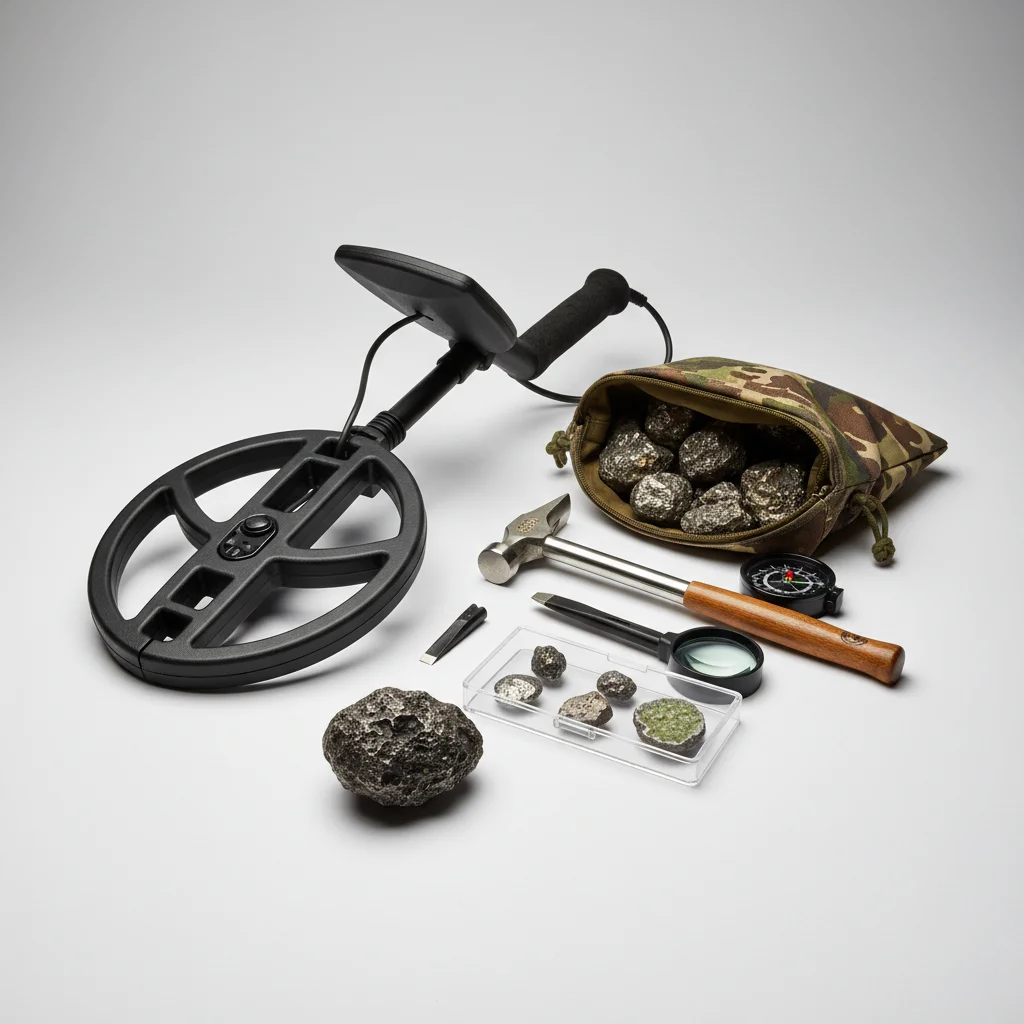
Metal detecting for meteorites is a specialized but rewarding pursuit, and you can indeed find these extraterrestrial rocks with the right equipment and knowledge. While most meteorites are not metallic, a significant portion, particularly iron meteorites and stony-iron meteorites, contain enough iron and nickel to be detectable by standard metal detectors. The key is understanding their unique characteristics and where to search.
Understanding Meteorite Types and Detectability
Meteorites are broadly classified into three main types: stony, iron, and stony-iron. Stony meteorites are the most common but often the hardest to detect with a metal detector due to their low metal content. Iron meteorites, on the other hand, are almost entirely composed of iron and nickel, making them highly conductive and easily detectable. Stony-iron meteorites, a rarer type, contain a mix of silicate minerals and metal, offering good detectability. When searching, you’re primarily targeting iron and stony-iron meteorites, as well as stony meteorites with significant metal inclusions.
The composition directly influences how a metal detector responds. Iron meteorites will give a strong, clear signal, similar to a large piece of iron. Stony-iron meteorites will also produce a good signal, though perhaps not as strong as pure iron. Stony meteorites with metal flakes might give a fainter, broken signal, requiring more careful discrimination settings.
Choosing the Right Metal Detector for Meteorite Hunting
For meteorite hunting, a very low frequency (VLF) metal detector with good ground balancing capabilities is generally recommended. Pulse induction (PI) detectors can also be effective, especially in highly mineralized ground, but they typically lack the discrimination features of VLF machines, making it harder to distinguish meteorites from hot rocks or man-made junk. Look for a detector that offers manual ground balance, adjustable sensitivity, and a clear target ID system. A larger coil can cover more ground, but a smaller coil might offer better sensitivity to smaller, deeper targets.
- VLF Detectors: Excellent for discrimination and identifying different metal types.
- PI Detectors: Superior depth in mineralized soil, but less discrimination.
- Ground Balance: Essential for stable operation in varied soil conditions.
- Adjustable Sensitivity: Allows fine-tuning to maximize detection depth and minimize false signals.
- Target ID: Helps in distinguishing potential meteorites from terrestrial rocks and trash.
Consider models known for their sensitivity to small targets and their ability to handle challenging ground conditions.is a popular choice among meteorite hunters for its versatility and performance.
Where to Search for Meteorites
|
Our Picks for the Best Metal Detector in 2026
As an Amazon Associate I earn from qualifying purchases.
|
||
| Num | Product | Action |
|---|---|---|
| 1 | Bounty Hunter TK4 Tracker IV Metal Detector – All-Terrain Gold, Silver, Coin & Relic Finder with 8" Waterproof Coil, 3 Detection Modes – for Adults & Kids – Made in USA |

|
| 2 | 2026 Latest Metal Detector for Adults, Professional Waterproof & Adjustable Stem, Higher Accuracy Gold Detector with LCD, Advanced DSP Chip, 2.26 Pounds Lightweight Suitable for Beach and Backyard |
|
| 3 | PANCKY Metal Detectors for Adults Waterproof, Professional Higher Accuracy Gold Detector with LCD Display, 5 Mode, Advanced DSP Chip 10" Coil, PK0075 |
|
| 4 | SUNPOW Metal Detector for Adults Professional - High Accuracy with 12" Waterproof Coil, 2x Backlit LCD Display, Advanced DSP Chip, 5 Modes, Adjustable Length (19"-59"), Sturdy Spiral Structure -OTMD14 |
|
| 5 | Metal Detector for Adults Professional, Waterproof Pinpoint, High Accuracy Gold and Silver Detection, Underwater and Beach Use, 10'' IP68 Coil, Bigger LCD, New Advanced DSP Chip, Black |
|
| 6 | PANCKY Metal Detectors for Adults Waterproof, Professional Higher Accuracy Gold Detector with LCD Display, 5 Mode, Advanced DSP Chip 10" Coil, PK0075 |
|
| 7 | Professional Metal Detector for Adults,12" IP68 Waterproof Search Coil with LCD Backlight,5 Modes Gold Detector,Advanced DSP Chip&High Accuracy System for Beach/Gold Hunting |
|
| 8 | SUNPOW Metal Detector for Adults & Kids, Kids Metal Detector kit Waterproof for Gold Detecting, Stable Anti-Interference, Higher Accuracy, Bigger LCD Display, 4 Modes, 8" Search Coil, MD13 |
|
| 9 | DR.ÖTEK Metal Detector for Adults, Professional Metal Detectors Waterproof with 10" IP68 Coil, Larger LCD Display, High Accuracy for Gold & Silver Detection & Beach Treasure Hunting, Beginner Friendly |
|
| 10 | GoGonova Metal Detector for Adults & Kids, Kids Metal Detector, Waterproof Metal Detectors with High Accuracy Lightweight 8" Search Coil, All Metal & Disc Modes for Junior & Youth Gold Detector |
|
Meteorites are more likely to be found in certain environments. Deserts are prime locations because the dry, stable conditions preserve meteorites well, and the lack of vegetation makes them easier to spot. Dry lakebeds, known as playas, are also excellent hunting grounds. Agricultural fields, especially after plowing, can expose new material. Areas with minimal human activity and low levels of terrestrial iron are also advantageous. Avoid areas with high concentrations of man-made debris, as this will lead to numerous false signals.
Focus on areas where meteorites would be less likely to be covered by vegetation or soil accumulation. Old streambeds or ancient floodplains can also concentrate meteorites. Research historical meteorite fall locations, as these areas often yield multiple fragments from the same event.
Techniques and Tips for Successful Meteorite Hunting
When metal detecting for meteorites, sweep your coil slowly and methodically. Pay close attention to the audio signals and the target ID. Meteorites often produce a solid, repeatable signal. If you get a signal, carefully pinpoint the target and excavate it. Always carry a strong magnet; most meteorites are magnetic to some degree. Also, look for fusion crust (a thin, black, glassy coating), regmaglypts (thumbprint-like indentations), and a higher density than typical terrestrial rocks.
It’s crucial to differentiate meteorites from ‘hot rocks’ – terrestrial rocks with high mineral content that can give a false signal. Hot rocks usually produce a broken or inconsistent signal, and their target ID will often be different from metallic objects. Practice with known meteorites or iron samples to get familiar with the sounds and readings.offers a comprehensive guide on identifying meteorites in the field.
Legal and Ethical Considerations
Before you start hunting, understand the legalities of meteorite collecting in your area. In some places, meteorites found on private land belong to the landowner. On public lands, regulations vary; some require permits, while others allow collection for personal use. Always obtain permission before searching on private property. Ethical considerations also play a role; if you find a significant or scientifically important meteorite, consider reporting it to a scientific institution. This can contribute valuable data to meteorite research.
