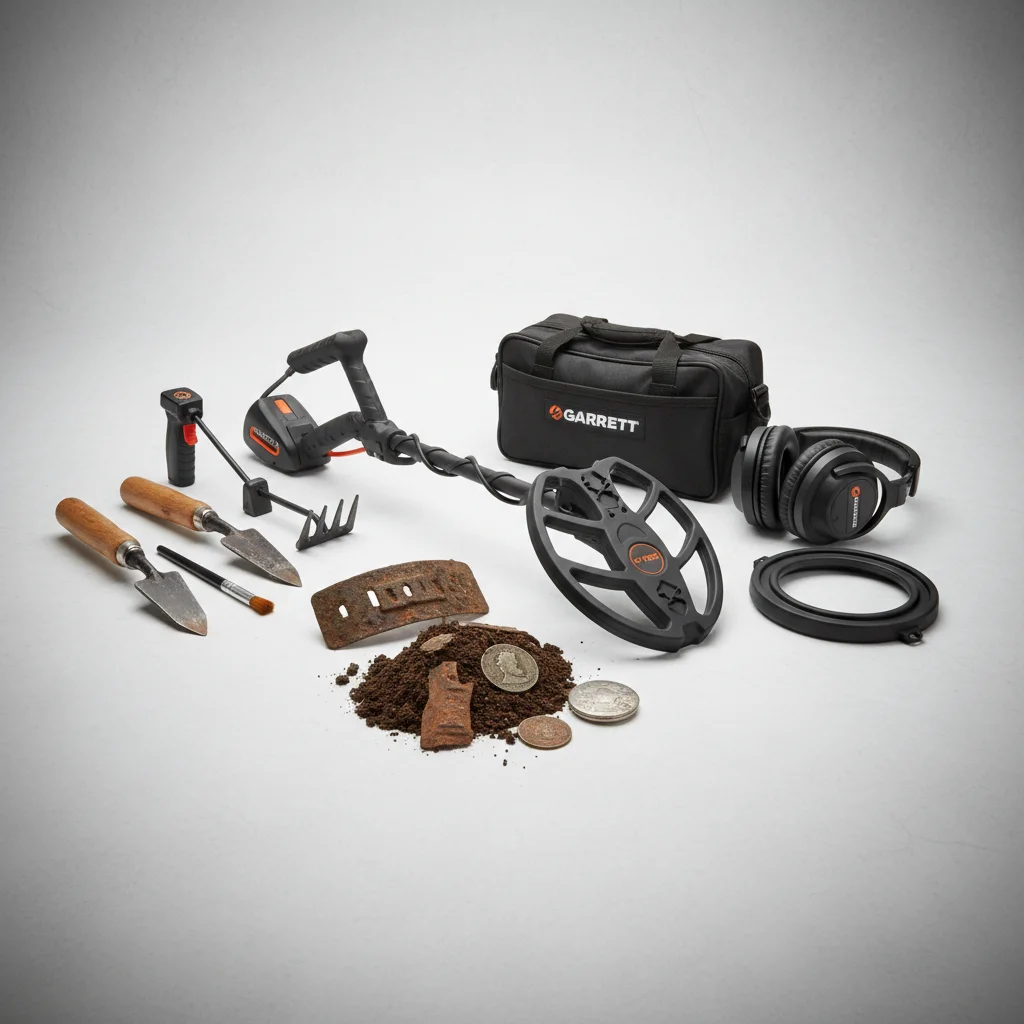
Optimizing your metal detector settings for relic hunting can significantly increase your chances of finding historical artifacts. The best settings typically involve a combination of high sensitivity, a lower discrimination level, and a specific ground balance to penetrate deeper and identify older, often less conductive metals. For most relic hunts, you’ll want to prioritize depth and target identification over rejecting modern trash.
Understanding Discrimination and Sensitivity for Relics
When searching for relics, your discrimination setting is crucial. Many valuable relics, such as old coins, buttons, or military artifacts, are made from iron or low-conductive alloys that modern detectors might filter out if discrimination is set too high. A good starting point is to set your discrimination just above iron, or even in an ‘all-metal’ mode if your site is relatively clean. This allows you to hear faint signals from deeply buried or less conductive targets. Conversely, sensitivity should be set as high as possible without causing excessive false signals. This maximizes your detector’s depth capability, which is often essential for finding older, undisturbed relics.
Ground Balance: Key to Deeper Relics
Proper ground balancing is perhaps the most critical setting for deep relic hunting. Mineralized soil can mask deep targets and cause erratic signals. Most modern detectors offer either automatic or manual ground balance. For relic hunting, a manual ground balance often provides the most stable and deepest performance, allowing you to fine-tune the detector to the specific soil conditions. If your detector has a tracking ground balance feature, consider turning it off or using it sparingly in areas with consistent ground mineralization, as it can sometimes ‘tune out’ faint, deep targets over time.
Coil Selection for Relic Hunting
|
Our Picks for the Best Metal Detector in 2026
As an Amazon Associate I earn from qualifying purchases.
|
||
| Num | Product | Action |
|---|---|---|
| 1 | SUNPOW Metal Detector for Adults Professional - High Accuracy with 12" Waterproof Coil, 2x Backlit LCD Display, Advanced DSP Chip, 5 Modes, Adjustable Length (19"-59"), Sturdy Spiral Structure -OTMD14 |

|
| 2 | SUNPOW Metal Detector for Adults & Kids, Kids Metal Detector kit Waterproof for Gold Detecting, Stable Anti-Interference, Higher Accuracy, Bigger LCD Display, 4 Modes, 8" Search Coil, MD13 |
|
| 3 | GoGonova Metal Detector for Adults & Kids, Kids Metal Detector, Waterproof Metal Detectors with High Accuracy Lightweight 8" Search Coil, All Metal & Disc Modes for Junior & Youth Gold Detector |
|
| 4 | PANCKY Metal Detectors for Adults Waterproof, Professional Higher Accuracy Gold Detector with LCD Display, 5 Mode, Advanced DSP Chip 10" Coil, PK0075 |
|
| 5 | 2026 Latest Metal Detector for Adults, Professional Waterproof & Adjustable Stem, Higher Accuracy Gold Detector with LCD, Advanced DSP Chip, 2.26 Pounds Lightweight Suitable for Beach and Backyard |
|
| 6 | Metal Detector for Adults Professional, Waterproof Pinpoint, High Accuracy Gold and Silver Detection, Underwater and Beach Use, 10'' IP68 Coil, Bigger LCD, New Advanced DSP Chip, Black |
|
| 7 | Professional Metal Detector for Adults,12" IP68 Waterproof Search Coil with LCD Backlight,5 Modes Gold Detector,Advanced DSP Chip&High Accuracy System for Beach/Gold Hunting |
|
| 8 | DR.ÖTEK Metal Detector for Adults, Professional Metal Detectors Waterproof with 10" IP68 Coil, Larger LCD Display, High Accuracy for Gold & Silver Detection & Beach Treasure Hunting, Beginner Friendly |
|
| 9 | Bounty Hunter TK4 Tracker IV Metal Detector – All-Terrain Gold, Silver, Coin & Relic Finder with 8" Waterproof Coil, 3 Detection Modes – for Adults & Kids – Made in USA |
|
| 10 | PANCKY Metal Detectors for Adults Waterproof, Professional Higher Accuracy Gold Detector with LCD Display, 5 Mode, Advanced DSP Chip 10" Coil, PK0075 |
|
The type of search coil you use also plays a significant role in relic recovery. While smaller coils are excellent for pinpointing in trashy areas, larger coils (10 inches or more) are generally preferred for relic hunting due to their increased depth penetration and wider sweep coverage. Concentric coils can offer good target separation, but Double-D (DD) coils often provide better performance in highly mineralized ground and offer more stable signals over a wider range of targets. Consider a larger DD coil for open fields and a smaller DD or concentric coil for areas with more iron contamination or tight spaces.
Audio Tones and Threshold Settings
Learning to interpret your detector’s audio tones is vital for relic hunting. Many relics produce faint, broken, or inconsistent signals, especially when deep. Setting your threshold to a barely audible hum allows you to hear these subtle changes, which could indicate a deep target. Avoid setting the threshold too high, as it can mask faint signals, or too low, as it can make it harder to distinguish true targets from ground noise. Experiment with different tone modes if your detector offers them; some relic hunters prefer a single tone for all targets, while others prefer multi-tone systems that provide more information about target conductivity.
Tips for Successful Relic Hunting
- Always research your hunting location for historical significance.
- Dig all repeatable signals, especially faint ones, as they could be deep relics.
- Use a good quality pinpointer to accurately locate targets in the plug.
- Carry a sturdy digging tool suitable for various soil conditions.
- Document your finds, including location and depth, for future reference.
By carefully adjusting these settings and understanding how they interact, you’ll be well on your way to uncovering fascinating pieces of history. Remember that practice and patience are key to mastering your detector for relic hunting. For advanced relic hunters, consider upgrading to a specialized deep-seeking machine.These detectors are designed to punch through mineralized ground and reach targets that standard VLF detectors might miss. Another essential accessory for any serious relic hunter is a durable and comfortable digging tool.A good shovel or spade will make the recovery process much more efficient and less strenuous.
