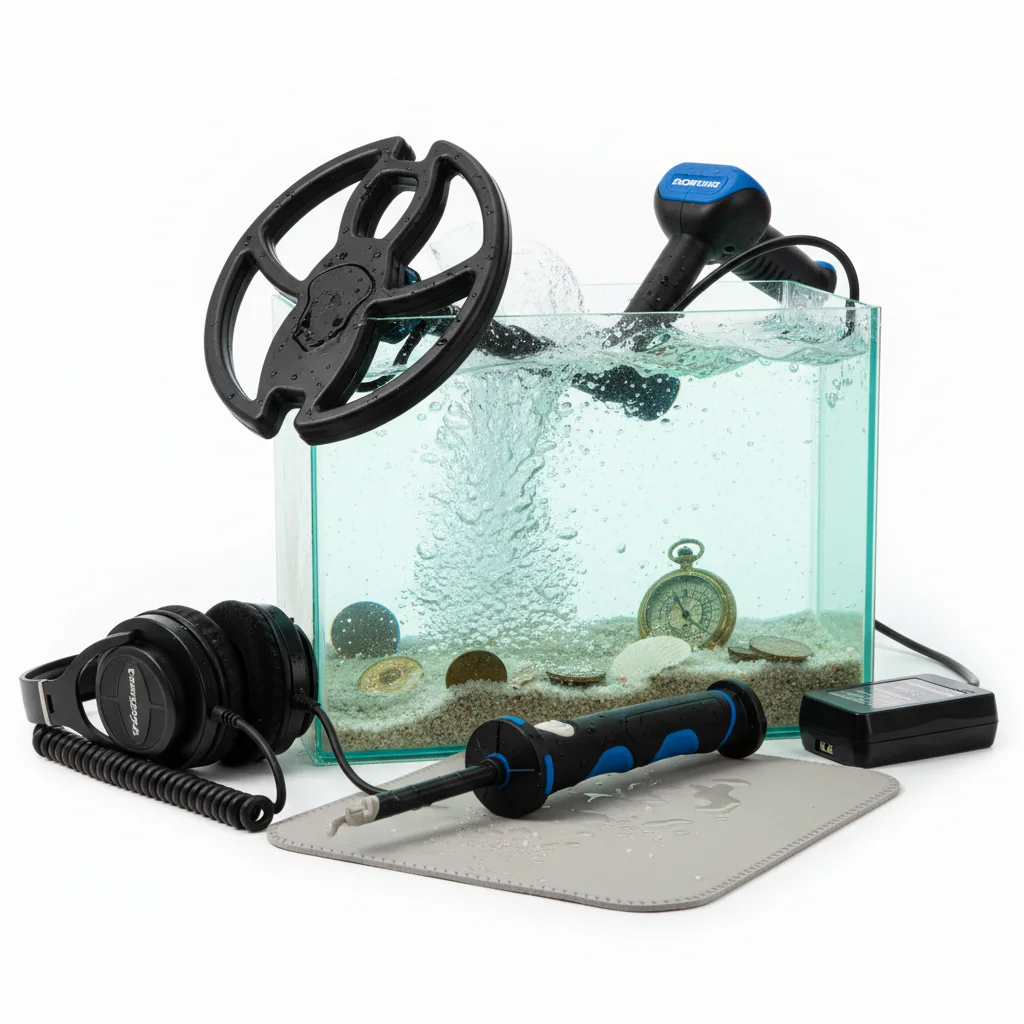
Metal detecting in saltwater environments requires specific settings to overcome the challenges posed by the conductive nature of salt water. For optimal performance, you’ll typically need to adjust your detector’s ground balance, sensitivity, and discrimination. The most effective approach involves using a pulse induction (PI) detector or a very low frequency (VLF) detector with advanced ground balancing capabilities, often requiring a manual ground balance setting between 50 and 70, depending on the specific beach conditions.
Understanding Saltwater Interference
Saltwater is highly conductive, creating a ‘salt effect’ that can cause standard metal detectors to false signal or become unstable. This interference is due to the detector’s electromagnetic field reacting with the minerals in the water. Without proper adjustments, your detector will constantly beep, making it impossible to distinguish between actual targets and the environment. This is why specialized detectors or specific settings are crucial for successful beach and shallow water hunting.
Ground Balance: Your First Line of Defense
Ground balance is the most critical setting for saltwater metal detecting. It allows your detector to ignore the mineralization in the ground and water while still detecting metal targets. Many modern VLF detectors offer automatic ground balance, but for saltwater, a manual or semi-automatic ground balance is often superior. Aim to set your ground balance to a point where the detector is stable over the wet sand and in the water. For most saltwater beaches, this will be in a higher numerical range than freshwater or dry land hunting.
Sensitivity and Discrimination Adjustments
|
Our Picks for the Best Metal Detector in 2026
As an Amazon Associate I earn from qualifying purchases.
|
||
| Num | Product | Action |
|---|---|---|
| 1 | Bounty Hunter TK4 Tracker IV Metal Detector – All-Terrain Gold, Silver, Coin & Relic Finder with 8" Waterproof Coil, 3 Detection Modes – for Adults & Kids – Made in USA |

|
| 2 | DR.ÖTEK Metal Detector for Adults, Professional Metal Detectors Waterproof with 10" IP68 Coil, Larger LCD Display, High Accuracy for Gold & Silver Detection & Beach Treasure Hunting, Beginner Friendly |
|
| 3 | PANCKY Metal Detectors for Adults Waterproof, Professional Higher Accuracy Gold Detector with LCD Display, 5 Mode, Advanced DSP Chip 10" Coil, PK0075 |
|
| 4 | PANCKY Metal Detectors for Adults Waterproof, Professional Higher Accuracy Gold Detector with LCD Display, 5 Mode, Advanced DSP Chip 10" Coil, PK0075 |
|
| 5 | Metal Detector for Adults Professional, Waterproof Pinpoint, High Accuracy Gold and Silver Detection, Underwater and Beach Use, 10'' IP68 Coil, Bigger LCD, New Advanced DSP Chip, Black |
|
| 6 | Professional Metal Detector for Adults,12" IP68 Waterproof Search Coil with LCD Backlight,5 Modes Gold Detector,Advanced DSP Chip&High Accuracy System for Beach/Gold Hunting |
|
| 7 | SUNPOW Metal Detector for Adults Professional - High Accuracy with 12" Waterproof Coil, 2x Backlit LCD Display, Advanced DSP Chip, 5 Modes, Adjustable Length (19"-59"), Sturdy Spiral Structure -OTMD14 |
|
| 8 | 2026 Latest Metal Detector for Adults, Professional Waterproof & Adjustable Stem, Higher Accuracy Gold Detector with LCD, Advanced DSP Chip, 2.26 Pounds Lightweight Suitable for Beach and Backyard |
|
| 9 | SUNPOW Metal Detector for Adults & Kids, Kids Metal Detector kit Waterproof for Gold Detecting, Stable Anti-Interference, Higher Accuracy, Bigger LCD Display, 4 Modes, 8" Search Coil, MD13 |
|
| 10 | GoGonova Metal Detector for Adults & Kids, Kids Metal Detector, Waterproof Metal Detectors with High Accuracy Lightweight 8" Search Coil, All Metal & Disc Modes for Junior & Youth Gold Detector |
|
After ground balancing, adjust your sensitivity. While it’s tempting to run at maximum sensitivity, in saltwater, this can lead to instability. Start with a moderate sensitivity setting and gradually increase it until you find a balance between depth and stability. Discrimination is also important; you’ll likely want to discriminate out iron and other common trash items. However, be cautious not to discriminate too much, as you might miss valuable targets like small gold jewelry. Many experienced hunters prefer to run with minimal discrimination and dig more targets to avoid missing anything.
Choosing the Right Detector Type
For serious saltwater hunting, pulse induction (PI) detectors are often recommended. They are less affected by saltwater mineralization and offer excellent depth. However, PI detectors typically have limited discrimination capabilities. VLF detectors with multi-frequency technology or advanced manual ground balance are also highly effective. These detectors can often provide better target ID and discrimination, which is useful for identifying specific types of targets. Consider models designed specifically for beach or underwater use.
Essential Tips for Saltwater Hunting
- Always test your settings on a clean patch of wet sand before beginning your hunt.
- Use waterproof headphones to hear faint signals clearly, especially in windy conditions.
- Dig all repeatable signals, even if they sound weak, as small gold can produce subtle tones.
- Rinse your detector thoroughly with fresh water after every saltwater hunt to prevent corrosion.
- Carry a sand scoop and a finds pouch designed for wet conditions.
Maintaining Your Equipment After Saltwater Exposure
Saltwater is corrosive, so proper maintenance after each hunt is non-negotiable. Immediately after leaving the beach, rinse your entire detector, coil, and any accessories with fresh water. Pay close attention to connectors, shafts, and any moving parts. Allow everything to air dry completely before storing. Regularly inspect your cables and connections for any signs of wear or corrosion. A little preventative maintenance goes a long way in extending the life of your valuable equipment.
